
Alex Steele
Writer




When growing businesses evaluate sales tax compliance options, two names frequently emerge: Zamp and Vertex Inc. These solutions represent fundamentally different approaches to solving the same problem. Vertex, founded in 1978, built its reputation as enterprise tax software serving Fortune 500 companies. Zamp takes a different path—delivering fully managed compliance where tax professionals handle everything from nexus monitoring to filing to audit defense. This comparison reveals why Zamp’s managed service model delivers superior value for e-commerce brands, SaaS companies, and mid-market businesses seeking compliance outcomes, not just compliance tools.
The distinction between Zamp and Vertex comes down to one question: Do you want software that helps you manage sales tax, or a partner that handles it entirely?
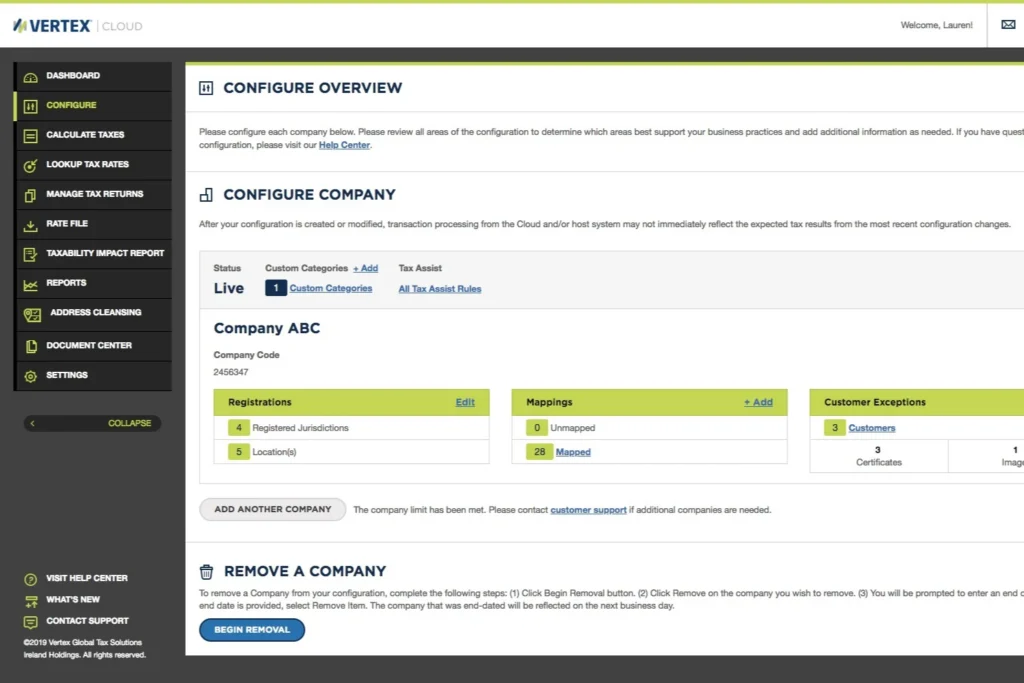
Vertex operates as tax software. Their platform provides tax determination engines, rate databases, and compliance tools. But the execution—registrations, filings, notice responses, audit defense—remains your responsibility or requires additional third-party services. Vertex’s product set is primarily software-centric, meaning businesses must still dedicate internal resources to compliance operations.
Zamp operates as a managed service. The platform handles calculations, but Zamp’s tax professionals also manage registrations, filings, remittance, notice resolution, and audit support. This “done for you” model means compliance happens without burdening finance teams.
The numbers reflect this difference:
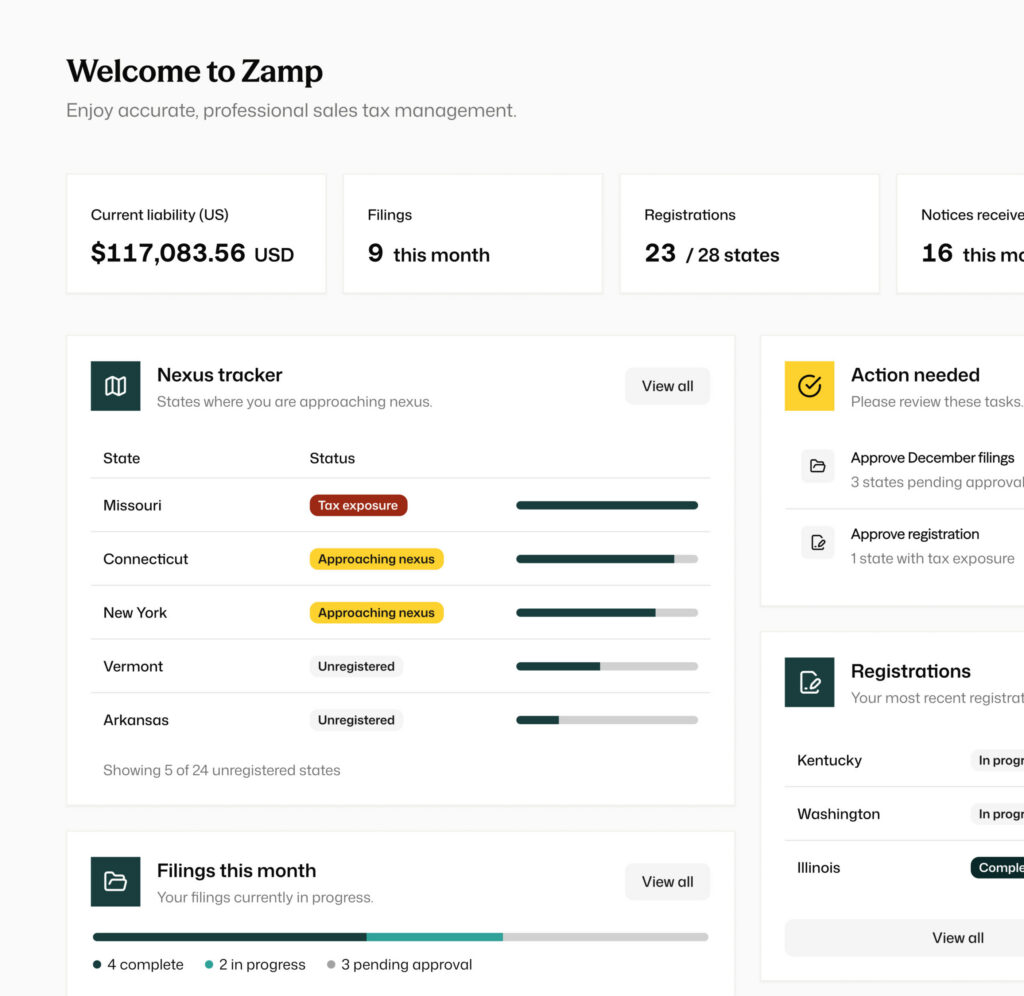
Zamp’s service portfolio covers the complete compliance lifecycle:
Vertex’s capabilities focus on tax determination:
The critical difference: Vertex provides tools; Zamp takes care of everything. With Vertex, businesses still need internal staff or third-party services to handle registrations, filings, notices, and audit defense. Zamp bundles all of this into one service.
Tax calculation accuracy directly impacts audit risk. Both platforms deliver strong accuracy, but their approaches differ.
Zamp’s accuracy approach:
Vertex’s accuracy approach:
For US-focused businesses, Zamp’s rooftop accuracy and data ownership provide confidence that calculations will hold up under audit. For global enterprises operating in 100+ countries, Vertex’s broader jurisdictional coverage may be necessary.
Both platforms integrate with major business systems, but their focus areas differ.
Zamp’s native integrations:
Vertex’s integration strengths:
The key difference: Zamp focuses on the platforms most mid-market companies use—Shopify, QuickBooks, NetSuite, Stripe. Vertex invests heavily in SAP and Oracle integrations that Fortune 500 companies require. For businesses using standard e-commerce and accounting tools, Zamp’s integration approach covers the essentials without unnecessary complexity.
Zamp’s service model advantages:
Vertex’s support structure:
The difference in support philosophy matters. Zamp’s customer-centric approach delivers hands-on expertise to every client, while Vertex’s structure reserves premium support for enterprise accounts.
Zamp’s ideal customers:
Vertex’s ideal customers:
The critical insight: Mid-market companies don’t need Vertex’s enterprise complexity. Zamp delivers the compliance outcomes these businesses need without the overhead of managing software tools, additional service providers, and internal tax resources.
Zamp’s team credentials:
Vertex’s team approach:
Onboarding comparison:
Time savings comparison:
For e-commerce brands, SaaS companies, and mid-market businesses, Zamp’s managed service model creates clear advantages:
When Vertex makes sense: Large enterprises with complex SAP/Oracle environments, global operations across 100+ countries, or dedicated internal tax teams wanting best-in-class software tools. These companies need Vertex’s enterprise capabilities—and have the resources to maximize them.
For everyone else,Zamp represents the evolved approach to sales tax compliance. The combination of managed service, liability protection, and dedicated expertise delivers better outcomes at lower total effort.
Zamp provides fully managed sales tax compliance where tax professionals handle everything—calculations, registrations, filings, notices, and audit support—as an integrated service. Vertex provides tax software tools that automate calculations and provide compliance documentation, but execution (registrations, filings, notice responses) remains the customer’s responsibility or requires additional services. For businesses wanting to eliminate sales tax as a burden, Zamp handles it. For enterprises with dedicated tax teams wanting powerful software tools, Vertex provides them.
Zamp uses rooftop-accurate calculations based on geospatial coordinates rather than ZIP code approximations, covering 13,000+ US jurisdictions. The company maintains first-party tax content—meaning Zamp owns and verifies all tax data rather than purchasing from third parties. This approach delivers 99.9%+ filing accuracy. Additionally, the Zamp Commitment backs this accuracy: if a Zamp-managed calculation or filing results in penalties or interest, Zamp covers the cost.
Yes. Zamp offers native integrations with QuickBooks Online (Intuit certified), NetSuite (native SuiteApp with OneWorld support), Xero, and Microsoft Dynamics BC. For e-commerce, Zamp connects with Shopify, BigCommerce, WooCommerce, and Adobe Commerce. Payment integration includes Stripe. Zamp also provides a free API sandbox for custom integrations. While Vertex offers deeper SAP and Oracle integrations for enterprise ERP environments, Zamp covers the platforms most mid-market companies actually use.
Zamp assigns a dedicated account manager and onboarding specialist to every customer—regardless of plan size. Average support response time is under 1 hour, and the team includes former state auditors who understand audit processes intimately. Vertex provides standard business-hours support, with dedicated account managers reserved for enterprise-tier customers. Zamp’s customer-centric approach delivers hands-on expertise to every client, while Vertex’s structure reserves premium support for larger accounts.
Yes. Zamp offers two models: “Done for you” where Zamp handles everything and clients simply approve, and “Done with you” where clients review with more oversight while Zamp executes. Both models eliminate the operational burden of sales tax compliance. Customers report saving 20+ hours monthly that would otherwise go to managing registrations, preparing filings, monitoring state portals for notices, and handling audit responses. The average onboarding of under two hours reflects this hands-off approach—there’s minimal setup because Zamp’s team does the work.
Yes. Zamp provides global VAT and GST managed services covering 70+ countries, including multi-region calculations, threshold monitoring, registration assistance, and unified multi-country filing. While Vertex covers 19,000+ global jurisdictions—broader coverage for complex multinational enterprises—Zamp’s global offering suits growing businesses expanding internationally without requiring enterprise-scale solutions. Both platforms handle the complexity of digital goods taxation, B2B exemptions, and cross-border compliance.
.png)
%20(1).png)