
Ari Goldstein
Head of Growth, Zamp


.png)

Pretty much every sales tax software option out there promises to solve the same problem: get the calculations right, file on time, and keep your business out of trouble with the state. What most comparison resources won’t tell you, though, is that these tools actually fall into two very different solution categories: those that manage the entire sales tax process from top to bottom, and those that merely give you the tools you need to do it yourself.
This guide compares ten of the leading sales tax software vendors through that specific lens, breaking down what you’re expected to handle versus what the solution does for you, as well as what you should know about each platform’s features, pricing, and reviews.
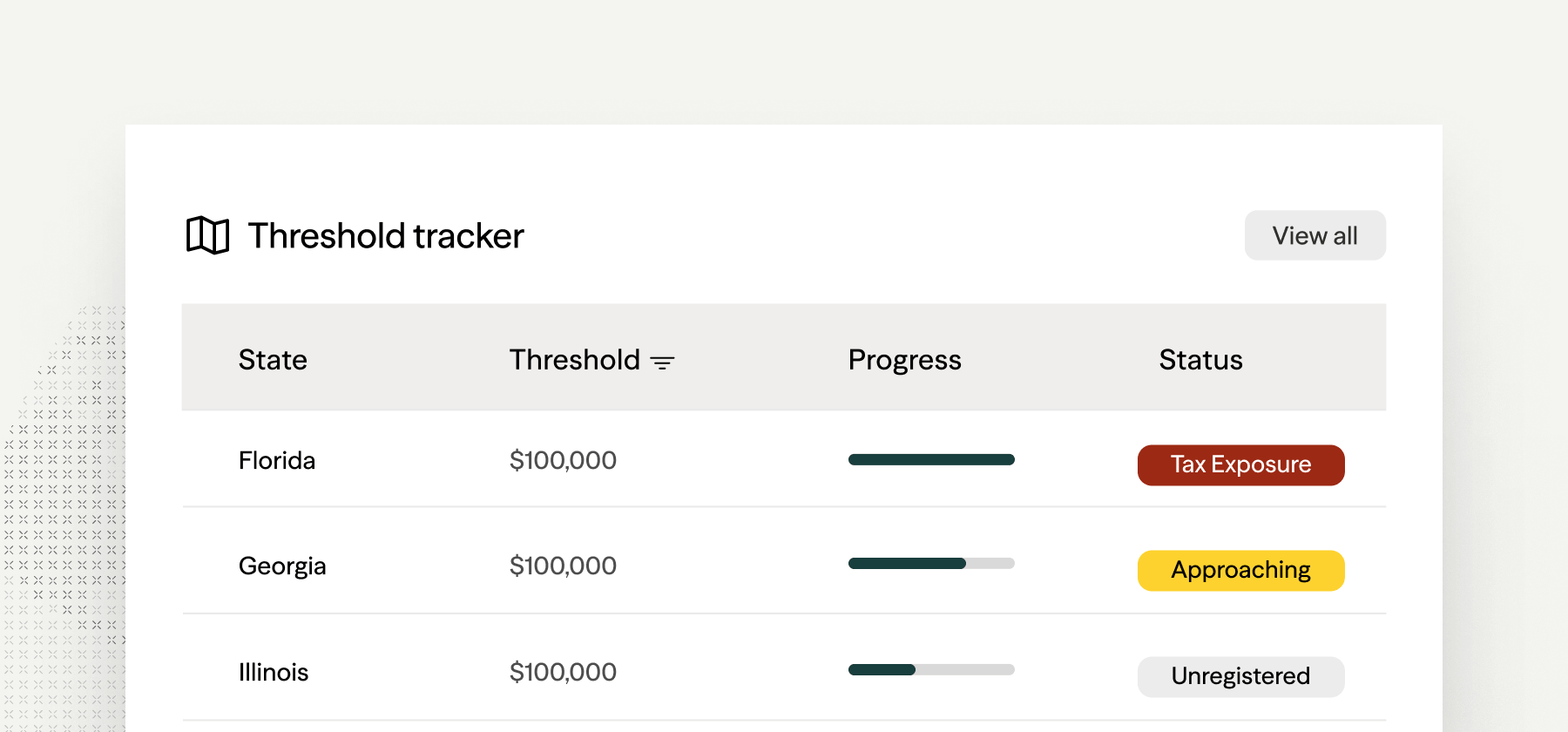
Most of the tools on the market today are cloud-based tax software that calculate the right sales tax rate for a buyer’s location the moment they check out, no local installation required. Behind the scenes, automated sales tax tracking adds the dollar amount of each sale to a running tally of how much business you’re doing in any given state, watching for the point where your total revenue crosses that state’s economic nexus threshold.
Eventually, depending on the platform, it either flags that a return is due or files it for you. Along the way, it should also manage exemption certificates for buyers who don’t owe tax, and keep a comprehensive record ready in case a state ever comes back with any tax-related questions.
To help cut through the marketing noise, we recommend beginning your evaluation of any platform with one simple question: when a state mails a notice, who handles it? With self-serve software, the answer is you (or whoever on your team has been tasked with managing sales tax). With a fully managed service, the vendor is responsible for all things sales tax-related, state notices included. Below, we’ve reviewed ten of the best sales tax software options with this question in mind.
All of the feature and pricing information below has been fact-checked against publicly available resources from each vendor. (We believe any comparison of tax compliance solutions should be held to this standard.)
Ratings and customer feedback were sourced from real tax software reviews on trusted third-party platforms like G2, Capterra, and Trustpilot. Legal information about nexus and the Wayfair decision was sourced from the decision itself or nonpartisan summaries.
Keep in mind that ratings and pricing models in this space change frequently. What we’ve compiled below reflects what was available as of this guide’s publish date. Be sure to double-check the sources we’ve linked to ensure you have the most up-to-date information before you make any final decisions.
Let’s run through a quick overview of the top ten options before we dig into the nitty-gritty details of each.
| Vendor | Best For | Pricing Model | Nexus Monitoring | Filing & Remittance | Exemption Certs | Audit Support | Operating Model |
|---|---|---|---|---|---|---|---|
| Zamp | Businesses that want compliance completely handled from end-to-end | Flat, custom-quoted, and scoped to footprint | Included; monitored by the Zamp team | Done for you | Managed for you | Included (and guaranteed via the Zamp Commitment) | Fully managed service |
| Avalara | Enterprises needing broad tax-type coverage | Volume/transaction-based; quote-based at scale | Self-serve tools | Self-serve, automatable | Self-serve module | Add-on/limited | Self-serve software |
| TaxJar (Stripe Tax) | Stripe-native and SMB ecommerce sellers | Volume-based monthly tiers; limited filing credits with option to purchase more as add-ons | Self-serve dashboard | Self-serve; credit-limited AutoFile | Limited | Self-serve | Self-serve software |
| Vertex | Large enterprises with complex ERP environments | Custom/enterprise quote | Self-serve, configurable | Self-serve, automatable | Self-serve module | Add-on | Self-serve software |
| Sovos | Regulated industries with complex multi-country compliance needs | Custom/enterprise quote | Self-serve, configurable | Self-serve, automatable | Self-serve module | Add-on | Self-serve software |
| Anrok | SaaS companies with digital-goods nexus complexity | Per-market subscription | Self-serve dashboard | Included in core product | Limited | Self-serve | Self-serve software |
| Numeral | Small ecommerce/SaaS teams wanting hands-off filing | Per-filing/per-registration | Included, free tier available | Done for you | Limited | Limited | Managed-leaning software |
| TaxCloud | Budget-conscious SMBs | Order-volume tiers + additional filing subscription | Self-serve | Self-serve, automatable | Self-serve module | Add-on | Self-serve software |
| Kintsugi | Early-stage startups wanting low-cost automation | Free tier; usage-based paid tier; custom quote enterprise tier | Self-serve dashboard | Self-serve, automatable | Limited | Limited | Self-serve software |
| Wolters Kluwer/CCH | Enterprises already on the CCH tax stack | Custom/enterprise quote | Self-serve, configurable | Self-serve, automatable | Self-serve module | Add-on | Self-serve with managed service add-on |
Now, let’s take a closer look at each platform, including what it does, who it’s built for, and what real users have to say about it.
Zamp was built around the idea that a business shouldn’t have to operate its own sales tax software at all. Founded in 2022 by Rohit Bhadange, Edward Lando, and Clete Werts, the company pairs its sophisticated, yet easy-to-use platform with an expert team that includes former state auditors. Zamp is backed by $30 million in total funding, most recently led by Acrew Capital with Thomson Reuters Ventures participating. It also partners with more than 120 accounting firms, making it as much a sales tax software for accountants managing multiple clients as it is a direct-to-business tool.
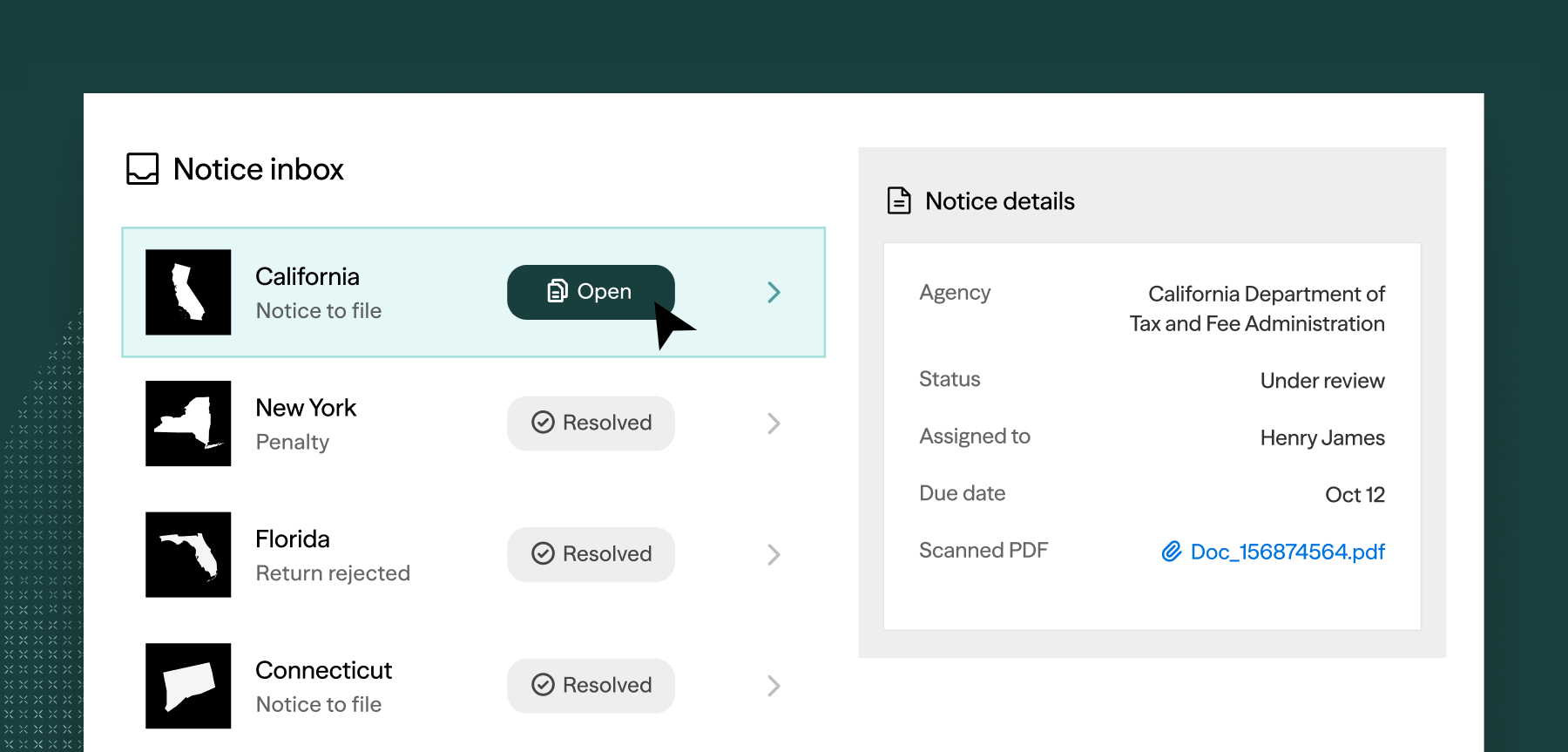
The Zamp team handles registration, filing, remittance, and notice responses directly, guided by the Zamp Commitment: a written guarantee covering calculation accuracy and on-time filing. Unlike many vendors that bill on a per-transaction or per-filing basis, Zamp’s pricing is flat and custom-quoted to a business’s unique footprint. In other words, as Paige Honeycomb at Puzzle, one of Zamp’s customers, explained, Zamp’s business model truly supports companies as they scale.
Zamp’s customer feedback speaks for itself: on G2, the company holds an impressive average rating of 4.7 out of 5 across 47 reviews, with users praising the company’s smooth onboarding, deep ecommerce/ERP integrations, and timely nexus monitoring. That said, Capterra currently shows no published reviews for Zamp, so third-party validation is mostly concentrated on one platform.
.png)
Avalara is the most recognizable name on this list, and the breadth of its product reflects that: sales and use tax is just one piece of a platform that also covers VAT, property tax, and 1099 reporting.
Pricing is custom-quoted based on volume and transaction count, though some add-on services are available at flat rates. Avalara has an average rating of 4.0 out of 5 across 355 Capterra reviews, and G2 shows the same 4.0 average across 826 reviews. Feedback on both review platforms shares a common theme: the tax calculations are reliable, but getting a real person on the phone when something goes wrong can be a major headache.
.png)
TaxJar became part of Stripe Tax after Stripe’s 2021 acquisition, remaining a strong fit for Shopify and Amazon merchants looking for a lighter self-serve tool (especially if payments already run through Stripe).
Pricing is published rather than quote-based, starting at $39 a month for the Starter tier and $99 a month for the Professional tier. Note that filing isn’t unlimited by default. The Starter tier includes two AutoFile credits a year, with the Professional tier bumping that up to four. Anything beyond that runs $50 to $55 per additional filing, making the model more of a “pay-as-you-go” structure that can make costs unpredictable as businesses grow. The company’s average Capterra rating is 4.4 out of 5 across 76 reviews, with G2 showing a slightly stronger average rating of 4.7 out of 5 across 252 reviews. It’s worth noting, however, that reviews submitted after the Stripe acquisition frequently cite a noticeable decline in TaxJar’s support quality.
.png)
Vertex has been in this business longer than most companies on this list, with roots in SAP and JD Edwards environments going back several years. It’s definitely built for more of an enterprise setup (i.e., large, multi-entity organizations already running a major ERP). So, it’s likely not the best match for small ecommerce brands that only have a handful of team members.
Pricing follows a quote-based, enterprise model; exact numbers are not published anywhere. Vertex has an average Capterra rating of 4.3 out of 5 across 75 reviews, and its average G2 rating comes in at 4.4 out of 5 across 467 reviews. Both sources reveal something uncommon in this category: many reviewers actually praise the support team’s responsiveness. Tradeoffs include an interface that hasn’t kept pace with its competitors and implementation timelines that can span several months.
.png)
Sovos handles compliance across more than 300 countries on some of its products, covering additional use cases like 1099 reporting alongside sales and use tax automation. This makes it a solid fit for businesses with real international exposure or unusually complex compliance needs.
Pricing is quote-based and tied to transaction volume and complexity. The company’s average rating on G2 is 4.2 out of 5 across 92 reviews, but Capterra tells a rougher story with an average rating of 3.5 out of 5 across 19 reviews, one of the lowest on this list. The common thread in negative reviews suggests a one-login-many-systems problem: certificate management, tax determination, and filing don’t always talk to each other consistently, leaving users to make the same updates multiple times across different parts of the platform.
.png)
Anrok built its product specifically for SaaS and digital-goods companies, a focus that shines through in some of its most recognizable customers: Anthropic, Notion, Vanta, and Mercury. Filing and remittance come standard in Anrok’s core product, a clear perk considering how many vendors on this list charge separately for it.
Pricing starts at $100 per market per month on the Starter tier, moving to a custom-quote model once a business operates in ten or more markets. Anrok’s average rating on G2 comes in at 4.5 out of 5 across 309 reviews, and the company does not have a presence on Capterra as of this article’s publish date. One important caveat to keep in mind: Anrok is designed for subscription and digital-goods businesses first, so trying to force a physical-goods, multichannel operation onto it might require some workarounds.
.png)
Numeral is one of the newer names here. Built tightly around Stripe and Shopify, its platform is geared toward smaller teams who want filing handled without a big internal learning curve. Instead of pricing with a flat subscription, Numeral charges per state filing and per state registration (though it offers a custom pricing option for larger companies). It also offers a free tier that only includes nexus monitoring.
Reviews are fairly split. On G2, Numeral sits at an average rating of 3.6 out of 5 across 20 reviews, with several reviewers who switched over from TaxJar specifically calling out the lackluster support team. Others describe duplicated filings and slow answers once their tax situation became more complicated. Trustpilot tells a similar story. All in all, Numeral is a reasonable choice for brands with a straightforward setup, but things can get bumpy once your tax needs become more complex.
.png)
TaxCloud is the bargain option in this lineup, thanks in part to its certification under the Streamlined Sales Tax (SST) program: calculation is free in the 24 SST member states no matter which plan you’re on.
Pricing combines order-volume tiers starting at $19 a month with a separate filing subscription starting at $39 a month. Reviews diverge quite a bit: TaxCloud has an average rating of 3.5 out of 5 across 73 reviews on Capterra, while the company’s average G2 rating comes in at 4.5 out of 5 across 43 reviews. Low cost is a consistently cited benefit in both sets of reviews; slow, inconsistent support is the most common complaint, echoed even in TaxCloud’s own replies to reviewers.
.png)
Kintsugi is the newest name on this list and, despite having the smallest review count by far, the company boasts some solid average ratings: 4.8 out of 5 on Capterra across 16 reviews, and 4.6 out of 5 on G2 across 46 reviews. Regarding pricing, a free tier covers nexus monitoring and address validation, with a usage-based paid tier adding filing and registration.
Multiple reviewers specifically describe switching over from Avalara or TaxJar due to cost and how they were treated as customers. This theme is consistent enough to take into consideration, but it’s also important to remember that the sample size is small compared to the more established names on this list.
.png)
CCH SureTax draws on more than a century of Wolters Kluwer’s own tax research, a strength that is especially relevant for industries like construction, manufacturing, and energy, which operate under constant audit risk. It’s an especially attractive option for businesses already running SAP or Acumatica, where CCH has certified integrations.
Pricing is quote-based and not published. Capterra reviewers rate CCH at an average 4.3 out of 5, but the sample size is very small, with just 4 total reviews. The company's average rating on G2 is 3.1 out of 5 across a slightly larger sample size of 12 reviews, though that listing incorporates feedback about Wolters Kluwer’s much broader CCH tax-prep suite, not just the sales tax product, so take it with a grain of salt. One additional consideration: CCH offers an optional Managed Services add-on, making it one of the few vendors on this list with a path to a managed relationship.
Successfully running any of the self-serve tools listed above requires a real, ongoing commitment from somebody on your team. You have to review nexus alerts as they come in, double-check flagged transactions, start each filing on time, and yes, open any envelopes from the state yourself. Businesses running software-only setups can burn significant time just keeping up with these ongoing logistics.
A fully managed service, on the other hand, takes registration, filing and remittance, exemption certificate management, and notice response off your plate, instead delegating it to a team whose entire job is staying on top of all these logistical to-do’s. This is the true difference between buying sales tax compliance software you still have to operate, and buying sales tax compliance services where the whole process is handled for you.
If you’re nervous about entrusting sales tax to an outside entity, look for a platform that provides some type of written guarantee around results. Zamp, for example, operates under the Zamp Commitment. (Numeral offers a similarly worded guarantee.) Of course, a guarantee is only as good as the track record backing it up, so do your research into the trustworthiness of any company you’re seriously considering to make sure what you’re promised is what you get.
Furthermore, look into the transparency of the solution’s pricing to make sure they won’t hit you with surprise fees or growth-related upcharges at some point down the line. Zamp’s buyout program page, for example, clearly states its full pricing methodology: a flat fee, no per-return charges, no per-state surcharges, and no surprise charges as your business grows.
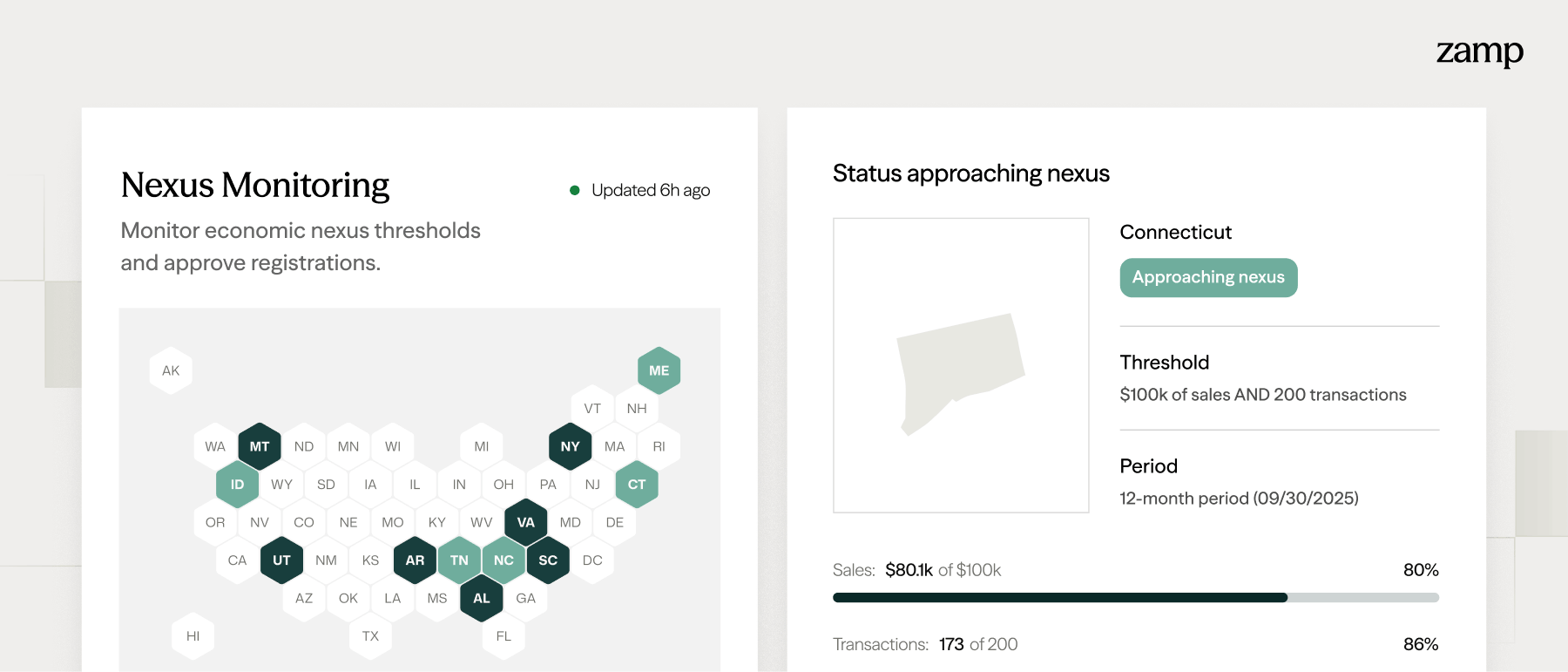
Economic nexus is the sales or transaction threshold that, once crossed in a particular state, creates a tax obligation in that state even without a physical presence, a rule the Supreme Court established in South Dakota v. Wayfair. (Oyez’s case summary provides a clear, nonpartisan source to learn more about the details of this landmark decision.)
Marketplace facilitator laws layer on top of that, shifting collection duties for marketplace sales onto platforms like Amazon. Importantly, though, a seller’s direct sales channels are still their own responsibility from a tax calculation and remittance perspective. So, as you are evaluating sales tax tools, be sure to ask directly whether the platform tracks these thresholds automatically across every channel, or whether you’re expected to manage cross-channel calculations yourself.
Some sales tax platforms file automatically once a return is due. Others calculate the number and stop there, leaving the actual filing to you or requiring an additional fee to handle the filing portion of the process. Furthermore, some of those fees may put a cap on included filings, charging you even more once you’ve exceeded that threshold. This is why it’s crucial to clarify what, exactly, a vendor means when it says it “handles sales tax.”
Certificates that allow certain buyers to purchase without paying tax upfront need to be collected, validated, and stored somewhere, ideally automatically. Some tools do this natively; others expect you to manage it in a separate system.
Circling back to an important question we posed earlier in this guide: when a notice shows up, does the vendor’s team draft the response, or does that responsibility fall back on you and your team? Confirm this directly rather than assuming, as “audit support” can mean very different things depending on which vendor is promising it.
Most vendor integration lists include the usual lineup (e.g., Shopify, NetSuite, QuickBooks, Stripe, and the like). That said, the depth of these integrations can vary significantly. A listed integration and a deep, real-time connection are not necessarily one and the same, so be sure to ask for detailed integration info for any business-critical platforms.
Flat, custom-quoted pricing and usage-based pricing both make sense depending on how much swing you can tolerate in your monthly budget. Neither model is inherently better; just know which one you’re buying into before your order volume doubles and you’re looking at an unexpectedly high bill that you didn’t plan for.
Sellers with fewer nexus states and a tighter budget usually match best with a usage-based or free-tier sales tax software for small business option like Kintsugi, TaxCloud, or TaxJar. It’s easy and relatively inexpensive to get started on these platforms, which is why many small businesses go for them initially, figuring they can always switch vendors later as they scale up.
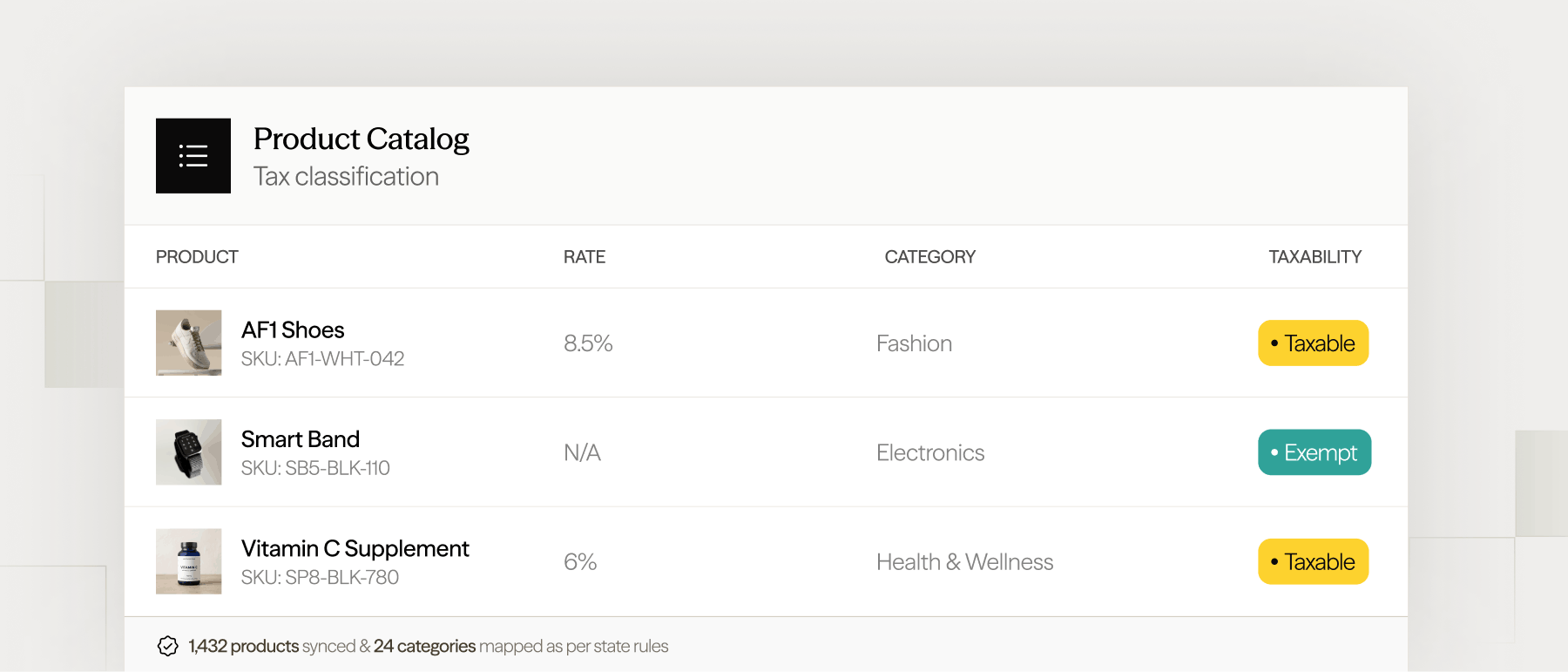
Once you have multiple sales channels and nexus states, you’ll want to look for a more sophisticated ecommerce sales tax software that can reconcile nexus across every channel combined (rather than channel-by-channel). Check out Zamp’s dedicated guide to ecommerce sales tax solutions to dive deeper into multichannel considerations like Amazon FBA inventory nexus. And if QuickBooks is part of your stack, this integration-focused comparison is worth a read too.
Enterprise platforms like Vertex, Sovos, Avalara, or Wolters Kluwer/CCH tend to work better for sellers with complex ERP environments, multiple entities, and often, multiple countries. These solutions function less like a single tool and more like an enterprise tax management platform that’s woven into the rest of your finance stack, chosen as much for integration depth as for the actual tax engine.
It’s software that calculates the correct tax rate at checkout, tracks where your sales have created economic nexus, and, depending on the vendor, files and remits the resulting returns. Some tools stop at calculation; others, like Zamp, manage the entire process from end to end.
It depends on the pricing model. Common approaches include flat subscriptions, usage-based pricing tied to transaction volume, per-filing fees, or a custom enterprise quote. Fully managed services tend to lean toward flat, predictable pricing rather than variable fees. Be sure to confirm current numbers directly with any vendor you’re considering.
Software-only solutions give you the tools and expect you to run them, leaving you fully responsible for monitoring nexus, resolving flagged transactions, and filing on time. A fully managed service like Zamp, on the other hand, takes on all that operational work for you, so nobody on your team has to become a part-time tax analyst.
Most likely, especially once you’re selling in more than a handful of states. Those platforms calculate tax well at the transaction level, but they generally don’t track nexus across every state you sell into, file returns, or manage exemption certificates.
Yes, usually. Most modern tools monitor your revenue and transaction counts against each state’s threshold ever since South Dakota v. Wayfair set the legal standard in 2018. Coverage of marketplace facilitator laws varies by vendor, so confirm the scope before you implement.
Smaller sellers often start with usage-based tools like TaxJar, Kintsugi, or TaxCloud. Enterprises with complex ERP needs often choose Vertex, Sovos, or Wolters Kluwer/CCH. Regardless of size, businesses that would rather have compliance fully handled rather than managing it themselves are the clearest fit for a fully managed service like Zamp.
It depends heavily on the vendor. Many self-serve tools treat this as a limited feature or a paid add-on, leaving you mostly responsible for responding. By contrast, fully managed sales tax providers like Zamp typically include notice response and audit support as part of their core service offering.
Self-serve tools can often connect to your store within days, though full registration and any historical backfiling can stretch into weeks. Managed services usually run a longer white-glove onboarding upfront (registration and cleanup included) in exchange for far less ongoing effort afterward.
The ten options we’ve presented in this guide vary widely in their pricing models, support quality, and software capabilities. But before you tease apart all those details, the single most important evaluation question to ask yourself is:
Do you want to run the software, or do you want the platform to handle everything on your behalf?
If you prefer to be more hands-on with your sales tax compliance (and your team has the bandwidth to own nexus monitoring, filing, and the occasional state notice), then a self-serve tool like Anrok, TaxJar, or Kintsugi might be a great fit. But if you’d rather offload all things sales tax to a team of experts, then a fully managed service like Zamp is a much better option.
Want to learn more about what fully managed sales tax compliance looks like for your business? Talk to Zamp’s team of sales tax experts today, or learn more about how Zamp makes it easy to switch from your current sales tax platform.
%20(1).png)