
Alex Steele
Writer




When growing businesses need to solve tax compliance, choosing the right partner becomes one of the most consequential decisions a finance team can make. Two options frequently appear in comparison: Avalara, the legacy incumbent with decades of market presence, and Zamp, the modern managed service redefining what compliance should look like. While Avalara provides tax software requiring significant internal management, Zamp offers a fundamentally different approach—an intelligent platform paired with dedicated tax professionals who own your compliance from start to finish. This comparison explains why Zamp delivers superior results for companies that want sales tax handled, not just enabled.
Avalara positions itself as a tax automation software provider, offering calculation engines and compliance tools for businesses to configure and manage themselves. Founded in 2004, Avalara has built scale over two decades, serving businesses with more than 1,400 integrations. The company’s model centers on providing technology—customers remain responsible for operating that technology correctly.
Zamp takes a radically different approach. Rather than handing you software and wishing you luck, Zamp operates as a managed tax service where tax professionals handle compliance end-to-end. The company combines an intelligent platform with dedicated specialists who know how states think about tax—including former state auditors and seasoned tax professionals. Serving over 1,200 finance and accounting teams, Zamp has processed more than $300 million in sales tax remitted.
The fundamental difference? Avalara gives you tools. Zamp takes care of everything.
Avalara’s service portfolio spans tax calculation and automation:
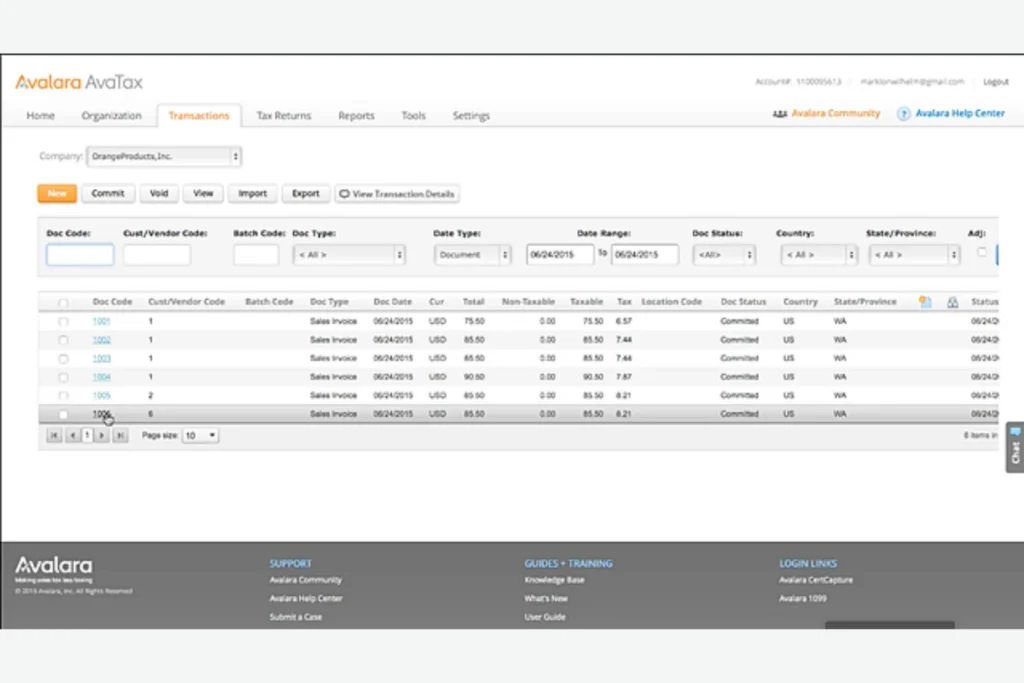
This modular approach works for companies with dedicated tax staff who can configure, monitor, and manage the software. But it places the burden of accuracy, reconciliation, and issue resolution squarely on your team.
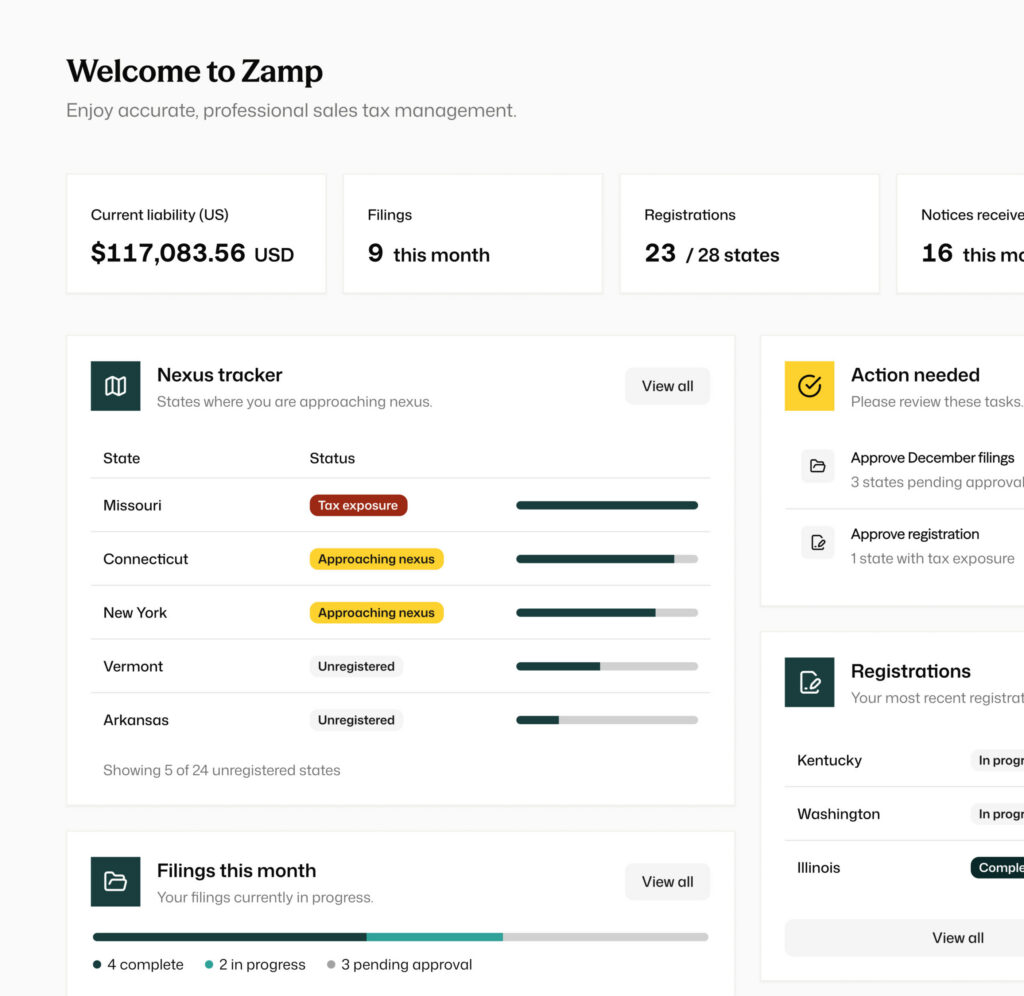
Zamp’s managed service covers everything in one solution:
The distinction matters: while Avalara might take weeks or months to implement and still requires your team to manage compliance, Zamp typically gets teams live within one week and removes sales tax from your plate entirely.
The pricing structures reveal each company’s philosophy and the true cost of ownership.
Avalara’s pricing structure:
Zamp’s pricing structure:
The value equation clearly favors Zamp. One predictable fee covers everything, making budgeting straightforward and eliminating the “hidden fee” frustration common with legacy providers.
Support quality separates adequate compliance from exceptional compliance—especially when state notices arrive or unexpected issues emerge.
Avalara’s support model:
Zamp’s support model:
The difference in support responsiveness and expertise proves critical when time-sensitive compliance issues arise.
Avalara primarily serves large enterprises with dedicated tax departments, companies comfortable managing software internally, and organizations requiring niche industry compliance (telecommunications, manufacturing). Their 1,400+ integrations serve businesses with complex, legacy tech stacks needing specific connectors.
Zamp serves e-commerce and omni-channel brands, software and SaaS companies, and accounting firms looking for managed compliance. The sweet spot ranges from startups to businesses with $300M in revenue who want sales tax handled without building internal expertise. Zamp’s clients include multi-channel sellers managing Amazon, Shopify, DTC, and wholesale, as well as SaaS companies dealing with state-by-state taxability variations.
This distinction matters significantly. If you have a dedicated SALT team and prefer configuring software yourself, Avalara’s DIY model might work. But for e-commerce businesses and lean finance teams who want compliance off their plate entirely, Zamp’s managed service delivers what they actually need.
Both companies process tax calculations and filings—but the accountability for outcomes differs dramatically.
Avalara’s accountability model:
Zamp’s accountability model:
The Zamp Commitment represents a fundamental shift. When Zamp handles your compliance, they stand behind the work. When your CFO asks “why was this taxed this way?”—Zamp can answer. With DIY software, you’re on your own to explain and defend every calculation.
Getting started shouldn’t take months or require expensive implementation partners.
Avalara implementation:
Zamp implementation:
For companies already using Avalara, Zamp provides seamless migration support. Current setup gets reviewed and validated, registrations and certificates transfer over, and integrations connect without disruption.
Avalara touts 1,400+ integrations—an impressive number. But integration count doesn’t equal integration quality.
Zamp’s integration approach:
The reality check:
While Avalara has more integrations, Zamp covers the platforms that SMB and mid-market companies actually use—and handles all setup for you.
For businesses with SAP, Oracle, or highly specialized legacy systems, Avalara’s broader ecosystem may matter. For everyone else, Zamp’s focused integrations with complete setup support deliver better outcomes faster.
E-commerce brands, SaaS companies, and lean finance teams face unique challenges that make Zamp the superior choice. These organizations don’t need software to manage—they need compliance handled so they can focus on growth.
Key advantages of Zamp’s managed service:
For companies evaluating their options, the question isn’t whether you can make DIY software work—it’s whether you should spend your team’s time configuring tax engines instead of growing your business.
Sales tax is complex. Paying for it shouldn’t be. Getting it right shouldn’t require building in-house expertise or managing rotating support tickets. When tax becomes simple, everything else accelerates.
Avalara provides tax software that your team configures, monitors, and manages. You’re responsible for accuracy, reconciliation, and resolving issues. Zamp operates as a managed service where dedicated tax professionals handle compliance end-to-end—calculations, nexus monitoring, registrations, filings, notices, and audit support. With Avalara, you get tools. With Zamp, you get compliance handled. The accountability difference matters most: Zamp takes responsibility for outcomes and covers penalties from their errors, while Avalara leaves liability with the customer.
Zamp uses a proprietary tax engine with rooftop-accurate calculations based on geospatial coordinates—not ZIP codes. This precision matters because over 13,000 U.S. tax jurisdictions have different rates and rules. Zamp owns and verifies all tax data, unlike competitors who buy third-party data. When questions arise about why something was taxed a certain way, Zamp’s experts can explain and defend every calculation—critical for audit protection.
Yes. Zamp offers a Global tier that includes multi-region VAT and GST calculations with location validation, international threshold monitoring, streamlined registration, and unified multi-country filing. While Avalara has more mature global coverage, Zamp’s global product provides comprehensive support for businesses expanding internationally. For companies primarily focused on U.S. compliance—where most businesses start—Zamp’s managed service is industry-leading.
The support experience differs dramatically. Zamp provides dedicated Account Managers and Onboarding Specialists who know your business, with average response times under 1 hour. Phone support is prominently available—not hidden behind ticket queues. Avalara uses ticket-based support with 8-24 hour response times and rotating agents who lack account context. This gap explains the difference in customer satisfaction between the two platforms.
Zamp offers native integrations with major platforms including Shopify, BigCommerce, WooCommerce, Adobe Commerce, Amazon, Walmart, QuickBooks Online, NetSuite, Microsoft Dynamics BC, Xero, and Stripe. A developer-friendly API with a 30-day sandbox handles custom connections. While Avalara has more integrations, Zamp covers the platforms that most SMB and mid-market companies use—and handles all setup through white-glove onboarding, eliminating the configuration headaches common with DIY tax software.
.png)
%20(1).png)