




Sales tax nexus is a connection between your business and a state that legally requires you to collect sales tax from buyers in that state. After the 2018 Supreme Court decision in South Dakota v. Wayfair, businesses can trigger nexus through physical presence or by exceeding economic thresholds—typically $100,000 in sales a year; some states also count 200 or more transactions.Sources: Legal Information Institute (Cornell Law School)+2Legal Information Institute (Cornell Law School)South Dakota v. Wayfair, Inc., 585 U.S. ___ (2018), opinion textlaw.cornell.edu/supremecourt/text/17-494Checked Illinois Department of RevenueInformational Bulletin FY 2026-12: Destination-Based Retailers’ Occupation Tax Changestax.illinois.gov/research/publications/bulletinsChecked Kentucky Department of RevenueRemote Retailers and Marketplace Providers FAQstaxanswers.ky.gov/Sales-and-Excise-Taxes/Pages/RChecked
Understanding sales tax nexus is crucial for e-commerce businesses, as non-compliance can lead to significant penalties, back taxes, and increased audit exposure. With nearly every state now enforcing economic nexus rules, businesses selling across state lines must monitor their sales activity and establish compliant tax collection processes to avoid costly surprises.
Understanding Sales Tax Nexus
Sales tax nexus represents the legal connection between your business and a state’s tax jurisdiction. The term “nexus” literally means connection, and in tax law, it determines when a state has the authority to require your business to collect sales tax from customers.
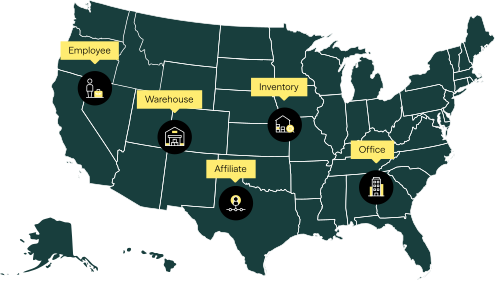
Before 2018, businesses primarily triggered nexus through physical presence—maintaining offices, warehouses, employees, or inventory in a state. The landmark South Dakota v. Wayfair Supreme Court decision fundamentally changed this landscape by allowing states to establish economic nexus based on sales volume and transaction count, regardless of physical presence.
This shift affects millions of online businesses and out-of-state sellers that previously operated without collecting sales tax in states where they lacked physical presence. Today, crossing state-specific economic thresholds automatically creates nexus obligations, making compliance significantly more complex for growing businesses.
How Sales Tax Nexus Works
Sales tax nexus operates on a simple principle: once your business establishes a specific connection threshold with a state, you become legally obligated to collect and remit sales tax from customers in that jurisdiction. However, determining these connections and managing compliance across multiple states creates significant complexity for growing businesses.
The nexus system functions through three primary mechanisms that establish your tax obligations. Understanding how each type works helps you identify current compliance requirements and monitor future obligations as your business expands into new markets.
Key Principles of Sales Tax Nexus
Here are the key principles of sales tax nexus you need to be aware of:
| Physical Nexus | Traditional nexus created through tangible business presence, including retail locations, offices, warehouses, employees, or stored inventory. Even a temporary presence, such as through trade shows or craft fairs, can establish nexus in many states. |
|---|---|
| Economic Nexus | Modern economic nexus laws are triggered when your company exceeds state-defined sales or transaction thresholds. Most states require $100,000 in annual sales (some also count 200 separate transactions), although some states, such as California, New York and Texas, require $500,000 in sales.Source: Texas Comptroller of Public AccountsTexas Comptroller of Public AccountsTexas Comptroller: Remote sellerscomptroller.texas.gov/taxes/sales/remote-sellersChecked |
| Affiliate Nexus | This connection is established through third-party relationships, including referral programs, drop-shipping arrangements, or click-through affiliate marketing that exceeds specified thresholds. |
Benefits of Understanding Sales Tax Nexus
Proper nexus management eliminates audit risk, prevents penalty accumulation, and ensures your business operates within legal compliance frameworks. Understanding nexus requirements helps you budget for tax collection systems and avoid the stress of discovering historical non-compliance.
Proactive nexus monitoring also supports strategic business planning by identifying when expansion into new markets will trigger additional compliance obligations, allowing you to prepare appropriate systems and processes.
Common Nexus Scenarios
- E-commerce Growth: Online retailers frequently discover nexus in multiple states as sales volume increases, requiring immediate compliance action to avoid penalties.
- Marketplace Selling: Businesses selling through Amazon, Walmart, or other marketplaces may have nexus obligations even when the marketplace handles tax collection, particularly for direct sales channels.
- Inventory Storage: Utilizing third-party logistics providers or fulfillment centers can create nexus in storage states, regardless of whether you own the warehouse facilities.
What to Do if You Have Sales Tax Nexus
When you discover that you have sales tax nexus in a state, that means that you must comply with that state’s sales and use tax requirements.
In a nutshell, this means you need to:
- Register for a state sales tax permit– This is generally done with the state’s Department of Revenue or equivalent government agency.
- Collect sales tax from buyers in that state – Once you have nexus in a state and are registered to collect sales tax, you’re legally obligated to collect sales tax from all buyers in that state. (This is with the exception of marketplaces like Amazon or Walmart, which are required in most US states to collect sales tax on your behalf.)
- File and remit sales tax – Your state will assign you a sales tax filing frequency and due dates. A state’s due date generally falls either monthly, quarterly or annually, depending on your sales volume. Be sure to file a sales tax return and remit the sales tax you’ve collected to the state.
No Sales Tax States
Five states—Alaska, New Hampshire, Oregon, Montana, and Delaware—do not impose state sales tax, though local jurisdictions in Alaska may charge local sales tax.
Types of Sales Tax Nexus That Trigger Tax Collection
Different business activities create nexus obligations, and understanding these categories helps you identify your current tax responsibilities and anticipate future compliance needs. While the fundamental concept remains consistent—sufficient connection requires tax collection—the specific triggers vary significantly between nexus types.
Modern businesses often have multiple nexus types simultaneously, which means you may qualify for nexus through several different pathways in the same state. Recognizing these overlapping obligations ensures comprehensive compliance and prevents gaps that could expose your business to penalties during state audits.
Physical Presence Nexus
- Retail stores, offices, or warehouses
- Employees, contractors, or sales representatives
- Inventory storage, including third-party facilities
- Temporary business activities like trade shows
Economic Nexus Thresholds
| Standard Threshold | $100,000 in sales annually; some states also count 200 transactions |
|---|---|
| High-Threshold States | California ($500,000), New York ($500,000 and more than 100 sales), Texas ($500,000)Sources: New York State Department of Taxation and Finance+1New York State Department of Taxation and FinanceRegistration requirement for businesses with no physical presence in New York Statetax.ny.gov/pubs_and_bulls/publications/sales/nexChecked California Department of Tax and Fee AdministrationCDTFA: Tax guide for out-of-state retailers (Wayfair)cdtfa.ca.gov/industry/wayfair.htmChecked |
| Combined Tests | Connecticut and New York require both a sales amount and a transaction count (Connecticut: $100,000 and 200 retail sales)Source: Connecticut Department of Revenue ServicesConnecticut Department of Revenue ServicesRegistering With DRSportal.ct.gov/drs/businesses/new-business-resourChecked |
Affiliate and Click-Through Nexus
- Referral partnerships usually exceed $10,000 annually
- In-state affiliates generating qualified referrals
- Drop-shipping arrangements with in-state suppliers
Marketplace Facilitator Impact
Most states require marketplace facilitators, such as Amazon, to collect tax on your behalf; however, this doesn’t eliminate your nexus obligations for direct sales channels or other marketplace platforms.
Challenges and Misconceptions of Sales Tax Nexus
Sales tax nexus compliance can trip up even experienced business owners because widespread misconceptions about nexus rules often lead to unintentional non-compliance. Many businesses operate under outdated assumptions or oversimplified interpretations of complex tax laws, which can create significant exposure to penalties and back-tax liability.
These compliance challenges multiply as businesses grow across state lines, making it difficult to track obligations without proper systems and expertise. Understanding common misconceptions helps you avoid costly mistakes while recognizing the practical hurdles that make nexus management increasingly complex for multi-state sellers.
Common Sales Tax Nexus Misconceptions
Here are some common sales tax nexus misconceptions:
- “I Only Sell Online, So I Don’t Have Nexus”: Economic nexus rules apply to all remote sellers, regardless of business model. Online-only businesses commonly have nexus in multiple states.
- “Marketplaces Handle All My Tax Obligations”: Marketplace facilitator laws only cover sales through those specific platforms. Direct website sales, other marketplaces, or wholesale activities may still require separate compliance.
- “Small Sales Volume Means No Nexus”: Even modest sales can trigger nexus in states with low thresholds or when combined with physical presence factors.
Compliance Challenges
There are compliance challenges when it comes to sales tax nexus, including:
| Multi-State Complexity | Each state maintains different nexus rules, filing frequencies, and tax rates, creating administrative complexity for businesses with nexus in multiple jurisdictions. |
|---|---|
| Historical Exposure | Discovering past nexus obligations can result in significant back-tax liability, penalties, and interest charges that strain business finances. |
| Monitoring Requirements | Tracking sales across all states requires ongoing attention and systems that many businesses lack, leading to unintentional non-compliance. |
Next Steps for Sales Tax Nexus Compliance
If you’ve identified potential nexus obligations, take immediate action to assess your exposure and establish compliant processes. The longer you wait, the more penalties and interest accumulate on unpaid tax obligations.
Consider partnering with a managed sales tax solution that combines automated compliance technology with expert oversight and guidance. This approach ensures accurate nexus monitoring, proper tax collection, and timely filing across all jurisdictions while freeing you to focus on growing your business rather than managing complex compliance requirements.
Ready to eliminate sales tax compliance stress? Zamp’s managed solution is backed by a team of experts who handle nexus monitoring, registration, filing, and remittance across all states, and if a Zamp-managed calculation or filing results in penalties or interest, Zamp covers the cost.
Sources
Each figure links to the page it comes from. We re-check these pages on a schedule; the dates show when we first and last checked each one.
Show all 9 sourcesHide sources
Texas Comptroller of Public Accounts
Texas Comptroller: Remote sellerscomptroller.texas.gov/taxes/sales/remote-sellers.php- Remote sellers with total Texas revenue under $500,000 in the preceding twelve months don’t have to get a permit or collect Texas use tax.
Checked
California Department of Tax and Fee Administration
CDTFA: Tax guide for out-of-state retailers (Wayfair)cdtfa.ca.gov/industry/wayfair.htm- Retailers must register and collect California use tax when their sales for delivery into California exceed $500,000.
Checked
New York State Department of Taxation and Finance
Registration requirement for businesses with no physical presence in New York Statetax.ny.gov/pubs_and_bulls/publications/sales/nexus.htm- A business with no physical presence in New York must register if, in the prior four sales tax quarters, it had more than $500,000 in sales of tangible goods delivered into the state and more than 100 such sales.
- New York’s remote-seller test also requires more than 100 sales delivered into the state.
Checked
Connecticut Department of Revenue Services
Registering With DRSportal.ct.gov/drs/businesses/new-business-resource-center/re- Connecticut's economic nexus threshold for remote sellers is div00,000 in gross receipts from retail sales into Connecticut and 200 transactions, measured over the 12-month period ending September 30 immediately preceding the monthly or quarterly period.
- Connecticut's economic nexus test counts transactions as well as sales: 200 transactions together with the div00,000 sales threshold.
Checked
Legal Information Institute (Cornell Law School)
South Dakota v. Wayfair, Inc., 585 U.S. ___ (2018), opinion textlaw.cornell.edu/supremecourt/text/17-494Checked
Illinois Department of Revenue
Informational Bulletin FY 2026-12: Destination-Based Retailers’ Occupation Tax Changestax.illinois.gov/research/publications/bulletins/fy-2026-12.- From January 1, 2026, a remote retailer must collect Illinois tax only if its Illinois gross receipts reach div00,000; the 200-transaction test was removed.
Checked
Kentucky Department of Revenue
Remote Retailers and Marketplace Providers FAQstaxanswers.ky.gov/Sales-and-Excise-Taxes/Pages/Remote-Retail- Kentucky repealed its 200-transaction economic nexus test effective August 1, 2026; only the div00,000 gross receipts threshold remains.
Checked
Zamp: economic nexus trackingzamp.com/feature/nexus-tracking Zamp
Checked
Zamp managed servicezamp.com/feature/managed-serviceZampChecked