
Alex Steele
Writer




Vertex has served enterprise organizations for over four decades, processing tax calculations across 19,000+ global jurisdictions. But as sales tax compliance has evolved—especially after the Wayfair decision expanded nexus obligations—many finance teams are exploring alternatives that better match their operational model, budget, or service expectations. Whether you’re seeking a managed sales tax service that handles compliance end-to-end, a platform optimized for SaaS billing, or a budget-friendly option for U.S.-only operations, this guide covers six alternatives worth evaluating.
The right choice depends on your business model, internal resources, and how much of the compliance burden you want to own versus delegate. Some companies prefer software tools that give them control. Others want a partner who takes ownership of the outcome—and the liability that comes with it.
Some providers offer accuracy guarantees that cover penalties and interest from their errors. Others place full liability on your company. This distinction matters significantly for risk management. For companies seeking a managed approach with shared liability, Zamp offers comprehensive coverage backed by an accuracy commitment.
Zamp takes a fundamentally different approach than traditional sales tax software. Rather than providing tools for your team to manage compliance, Zamp combines an intelligent platform with dedicated tax professionals who handle sales tax compliance—from nexus monitoring through filing and notice resolution.
The service model is flexible: Zamp can do it for you (where Zamp handles everything and you simply approve), or do it with you (where you maintain more oversight while Zamp executes). This flexibility serves companies from startups to $300M+ in revenue, including e-commerce brands, SaaS companies, and accounting firms managing client portfolios.
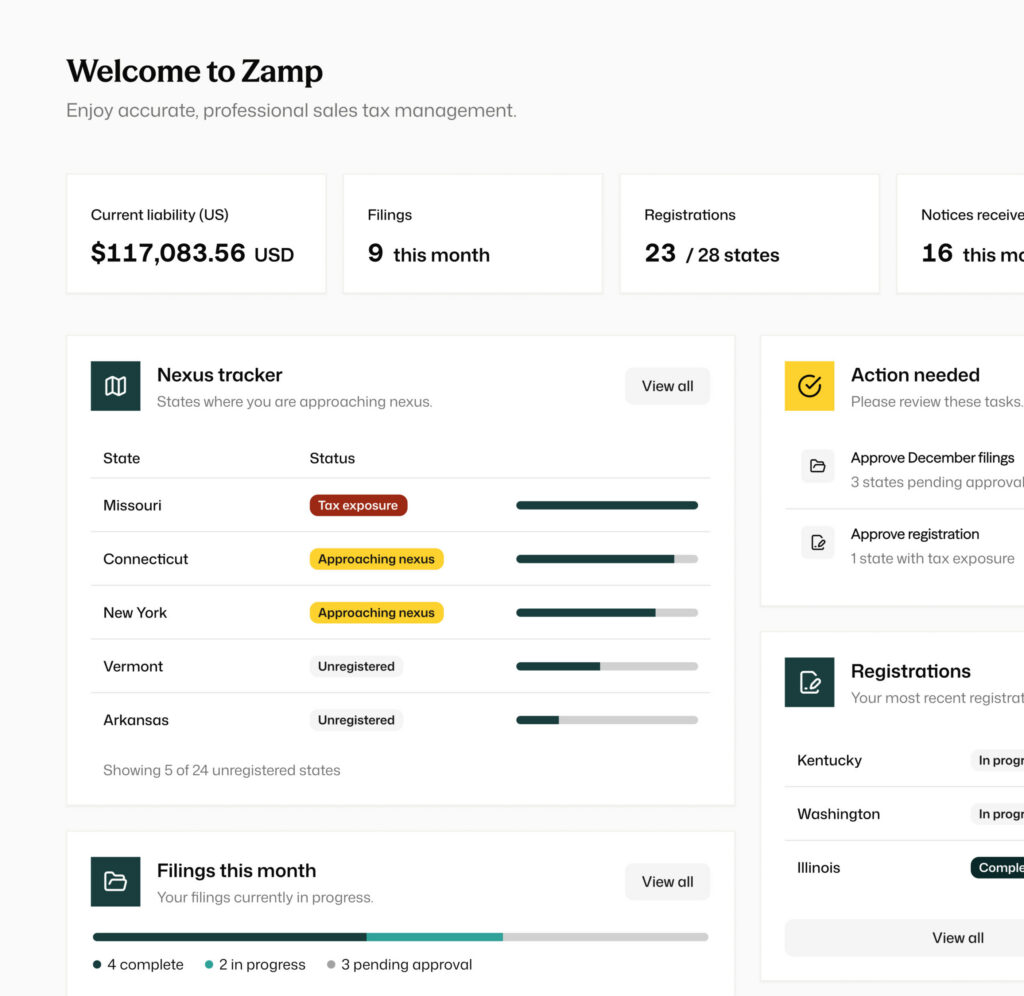
E-commerce and omni-channel brands managing multi-state compliance across Shopify, Amazon, BigCommerce, and wholesale channels; SaaS and software companies navigating state-by-state taxability rules and remote employee nexus; finance teams that want to eliminate the internal burden of sales tax entirely; companies seeking a partner who shares liability rather than software that puts all risk on them.
All-inclusive monthly pricing that covers software, service, registrations, filings, support, and dedicated account management. No per-transaction fees, no per-filing fees, no surprise invoices.
Get a free nexus assessment to understand your current exposure and see how Zamp works.
Avalara is an indirect tax management software offering comprehensive tax automation for organizations with established accounting departments. The platform provides extensive calculation capabilities with deep integration into enterprise systems.
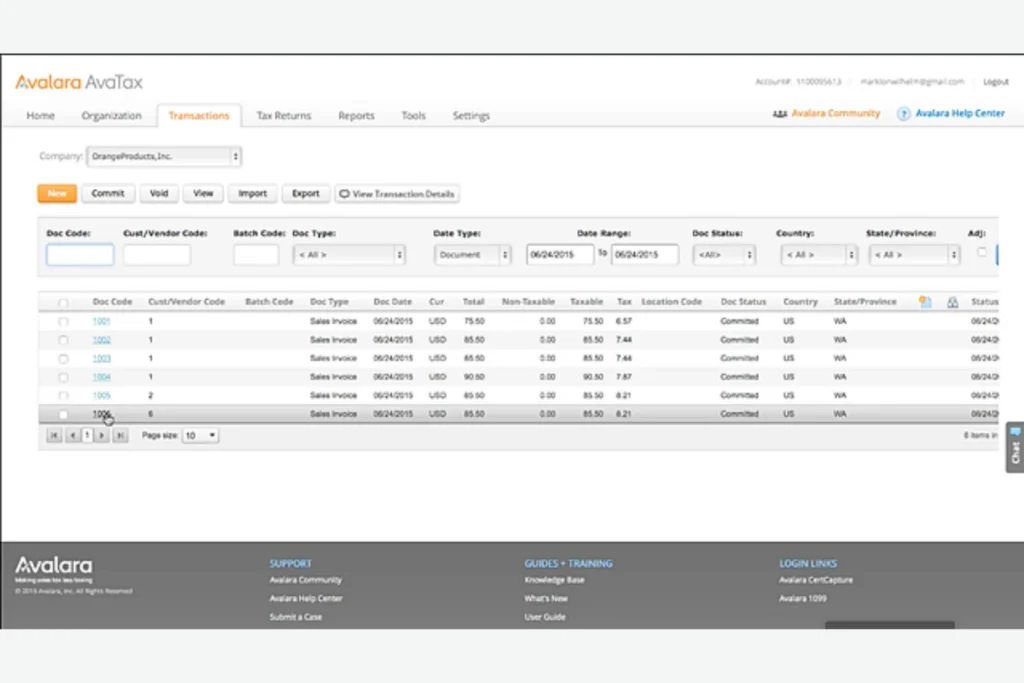
Large enterprises with in-house tax teams who need comprehensive global tax coverage and extensive ERP integrations. Ideal for organizations with dedicated IT resources for implementation and ongoing management.
Custom pricing based on transaction volume and feature requirements. For teams considering a switch, Zamp offers a migration guide from Avalara.
TaxJar, now owned by Stripe, serves 20,000 businesses with a focus on e-commerce sellers needing straightforward U.S. sales tax automation. The platform publishes clear tiered pricing, making it easy to budget for compliance costs.
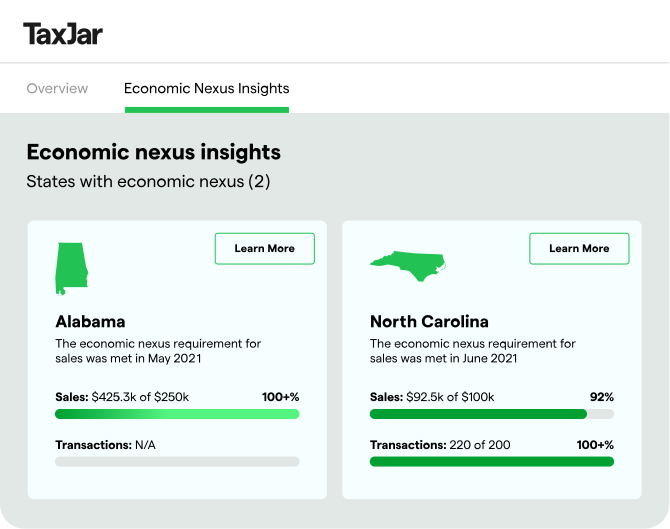
E-commerce businesses selling primarily in the United States; companies comfortable with a self-service model and DIY compliance management; teams seeking predictable monthly costs with published pricing tiers; developers who want API access without additional fees.
Anrok has built its platform specifically for SaaS and subscription businesses, with native support for recurring revenue models, usage-based billing, and the complex taxability rules that vary by state for software products.
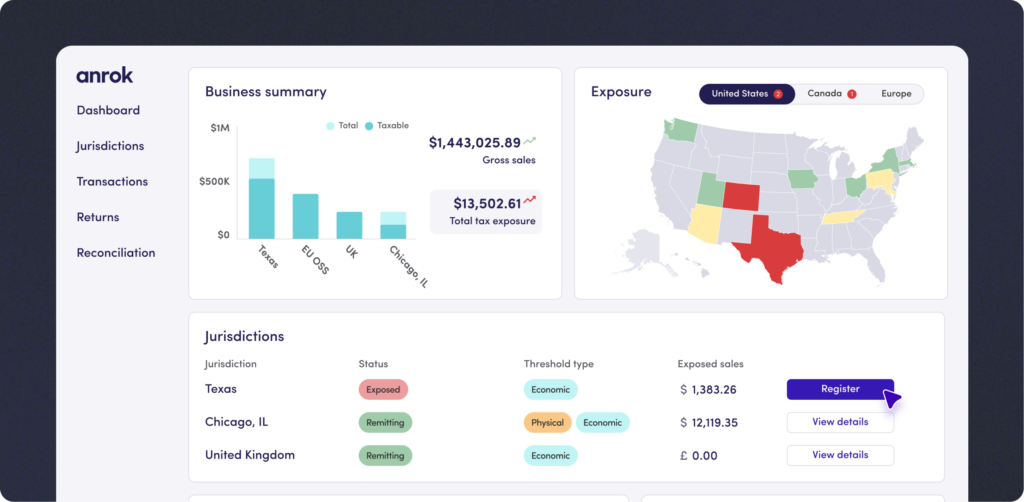
SaaS companies with subscription or usage-based pricing models; startups and growth-stage software businesses expanding into new states; teams using Stripe Billing, Zuora, or Salesforce Revenue Cloud for billing; companies needing sales tax on SaaS compliance specifically.
Custom pricing based on company size and requirements.
Sovos serves large multinational organizations with comprehensive indirect tax compliance across 200+ countries, including specialized capabilities for e-invoicing requirements in regions with mandatory electronic invoicing.
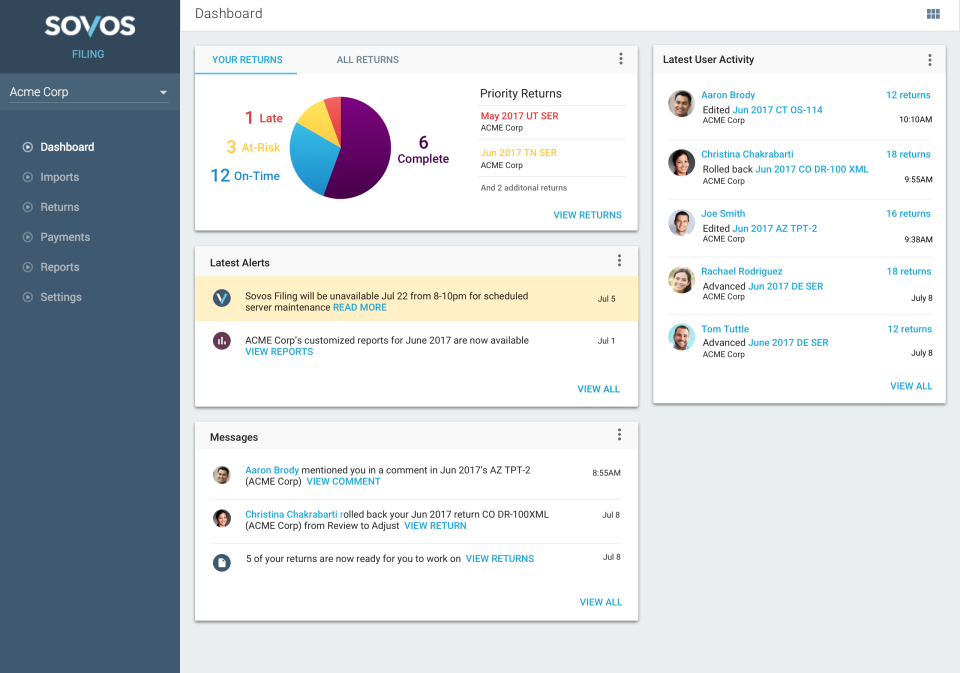
Large enterprises with operations across multiple countries and tax types; companies in regions with mandatory e-invoicing requirements (Brazil, Italy, Mexico, etc.); organizations needing tax withholding and regulatory reporting (1099, FATCA, CRS
Custom enterprise pricing.
TaxCloud offers a free calculation tier for businesses meeting certain criteria, positioning itself as an accessible entry point for companies beginning their sales tax filing journey.
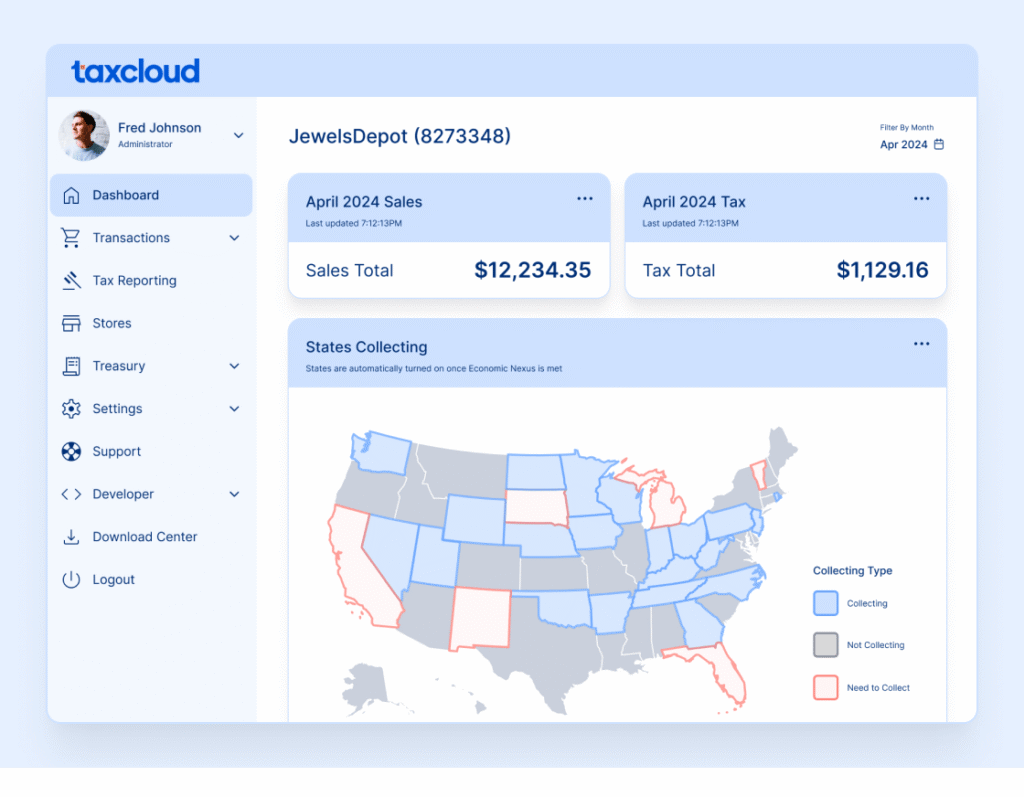
Small businesses with straightforward U.S. sales tax needs; companies participating in the Streamlined Sales Tax program; budget-conscious organizations seeking basic calculation and filing tools; businesses needing an affordable starting point before scaling to more comprehensive solutions.
Sales tax software provides tools—calculation engines, filing interfaces, nexus dashboards—that your team uses to manage compliance. You’re responsible for configuration, monitoring, filing deadlines, and resolving issues. A managed service like Zamp handles the entire process: monitoring your nexus exposure, managing registrations, filing returns, resolving notices, and defending audits. The key difference is who owns the outcome and where liability sits. With software, your team carries the burden and risk. With managed service, your provider takes on or shares that responsibility.
Reputable providers support data portability. Before switching, export your transaction history, filing records, exemption certificates, and registration documentation from your current platform. Ask prospective providers about their migration support—many offer assistance importing historical data. Maintaining audit-ready records from your previous platform is important even after migration, as you may need to reference historical filings for state inquiries.
Pricing structures fall into several categories. Per-transaction fees charge based on API calls or orders processed. Tiered subscriptions offer fixed monthly costs based on volume bands. Revenue-based pricing takes a percentage of sales processed. All-inclusive managed service pricing bundles software, filing, registrations, and support into a single scoped fee. Hidden costs often appear in per-filing fees, registration fees, notice management charges, and support tier upgrades. When comparing, calculate total cost of ownership including implementation, ongoing administration time, and all service fees—not just the headline software cost.
Integration availability matters, but it shouldn’t be the only factor. Most established sales tax platforms integrate with major e-commerce platforms (Shopify, BigCommerce, WooCommerce) and ERPs (NetSuite, QuickBooks, Microsoft Dynamics). More important questions: Does the platform handle your specific product taxability correctly? Does it support your multi-state filing requirements? Does the service model match how you want to operate? A platform with perfect integration but insufficient support or accuracy creates more problems than one requiring slightly more setup effort.
.png)
%20(1).png)