Alex Steele
Writer



Choosing the right sales tax API for your Xero accounting setup can mean the difference between seamless compliance and hours lost to manual calculations and filing errors. With 13,000+ U.S. tax jurisdictions applying different rates based on product type and customer location, even small businesses selling across state lines need automation that goes beyond basic rate lookups.
The right sales tax integration should pull invoice data from Xero, apply real-time rooftop-accurate rates, track economic nexus thresholds, and handle filings and registrations without requiring your finance team to become tax specialists. Whether you're an ecommerce seller managing multi-state compliance, a SaaS company handling international VAT, or a growing business that simply needs accurate calculations, the API you choose shapes how much time and risk you carry.
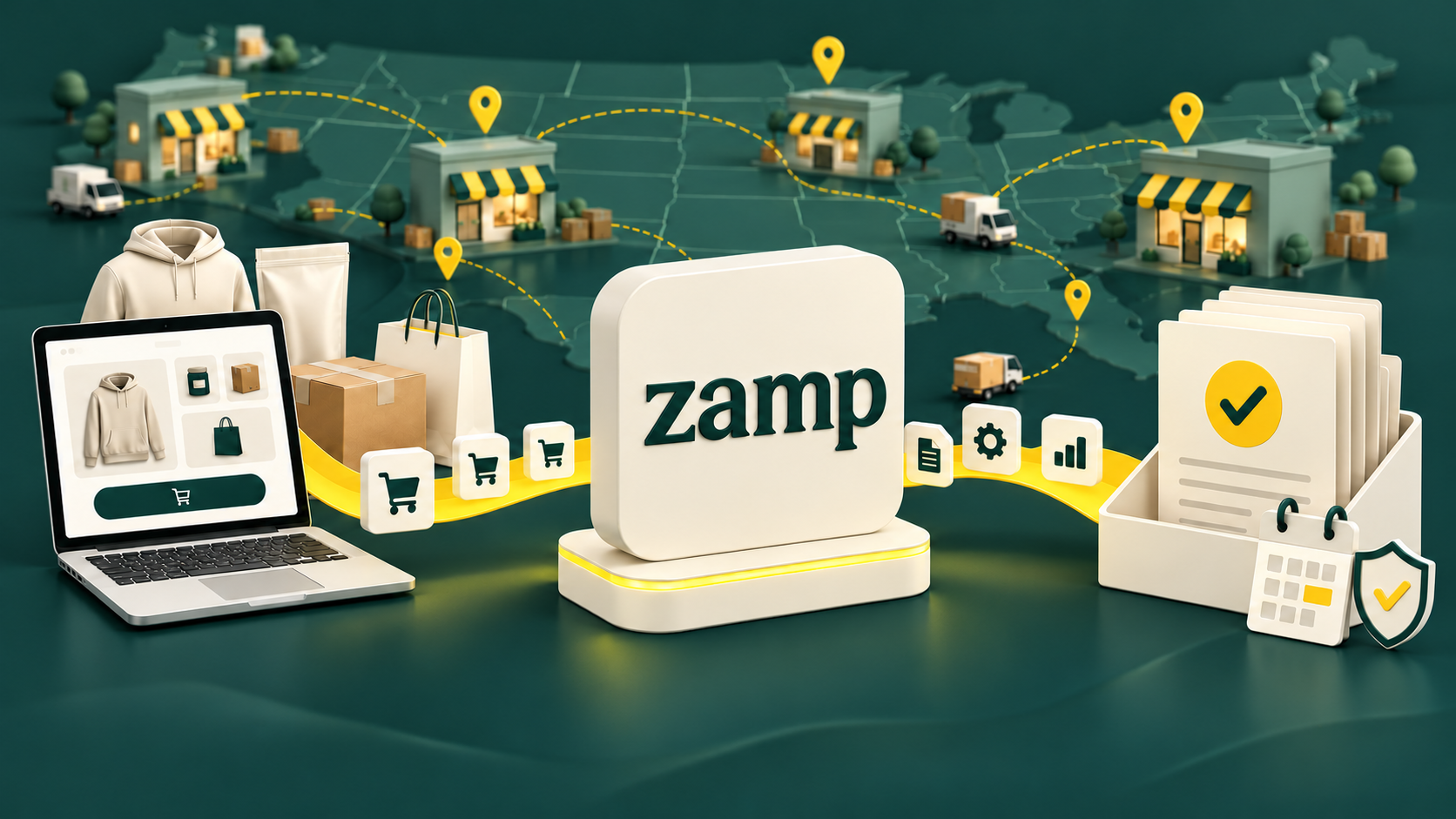
Zamp takes a fundamentally different approach than traditional sales tax software by combining an intelligent platform with dedicated tax professionals who handle compliance end-to-end. Rather than giving you tools and leaving you to figure out the rest, Zamp owns the outcome: calculations, registrations, filings, and notice management included.
Zamp is built for companies that want flexibility. Some businesses want sales tax taken fully off their plate. Others want more review and control while still relying on experts for execution. Zamp supports both models: do it for you or do it with you.
The platform delivers real-time rooftop-accurate rates across 13,000+ U.S. jurisdictions and 70+ countries using proprietary first-party tax data. Unlike providers that rely on third-party tax tables, Zamp owns and verifies its tax content. That matters when your CFO or controller needs to understand why a transaction was taxed a certain way.
Zamp also combines software with human expertise. Customers get access to dedicated tax specialists who help with product taxability, nexus exposure, registrations, filing workflows, notices, cleanup work, and audit support.
Zamp is built for startups to $300M+ companies that want sales tax compliance handled with expert support. It is especially valuable for businesses selling across multiple states, companies with complex product taxability, SaaS businesses with state-by-state rules, and finance teams that want sales tax to stop pulling time away from growth.
Zamp uses custom-scoped, all-in-one pricing based on your actual business footprint. There are no per-filing fees, no per-transaction fees, and no surprise invoices.
Avalara is one of the most established names in sales tax software and is commonly used by larger organizations with internal accounting, tax, and IT resources. For Xero users, Avalara is associated with automated tax calculation workflows that can support invoice-level tax handling inside accounting processes.
Avalara can support tax calculation workflows for businesses that want sales tax automation connected to their accounting system. For companies using Xero alongside ecommerce platforms, billing tools, or middleware, implementation planning matters because transaction data may originate outside Xero before it reaches the accounting ledger.
This is important for businesses that import invoices through APIs, third-party connectors, or marketplace tools. In those cases, companies should confirm whether tax is calculated before the transaction enters Xero or during the accounting workflow.
Avalara generally operates as software that businesses configure and maintain. Teams still need internal ownership over setup, workflows, return review, notices, and ongoing platform administration.
TaxJar is a sales tax platform known for ecommerce use cases across channels like Shopify, Amazon, WooCommerce, and direct sales. For Xero specifically, the important distinction is that TaxJar's Xero connection is limited for new users. New Xero account connections are no longer supported, so businesses evaluating TaxJar for a Xero-based accounting stack should confirm integration availability before relying on it as a current direct Xero option.
For legacy Xero users, TaxJar can help organize sales tax reporting alongside ecommerce sales data. The platform aggregates transaction data from ecommerce channels, organizes sales tax liability reporting, and supports automated filing workflows for registered states.
For new Xero users, the practical workflow may require a different accounting sync setup or a separate sales tax process outside a direct TaxJar-to-Xero connection.
TaxJar can be useful for ecommerce sellers that want a self-service sales tax workflow across multiple sales channels. For Xero users, integration availability is the key detail to verify before implementation.
Quaderno specializes in cross-border tax compliance for SaaS companies, digital product sellers, and subscription businesses with customers in the EU, UK, and beyond. The platform connects with Xero through an OAuth process and supports sync workflows for invoices, expenses, and credit notes.
Quaderno is built around international tax workflows. The system can apply VAT reverse charge rules for B2B transactions, validate VAT numbers, and generate tax-compliant invoices with localized requirements for currency, tax treatment, and documentation.
For SaaS and digital product companies, this makes Quaderno especially relevant when international VAT obligations are a meaningful part of the business.
Quaderno is most relevant for digital product sellers and SaaS companies that prioritize VAT compliance alongside U.S. sales tax reporting.
Anrok targets SaaS and software companies specifically, with tax infrastructure designed for subscription billing, usage-based models, B2B exemptions, and international tax obligations. The platform integrates with Xero and can also support direct API implementation for businesses with more customized billing systems.
Unlike retail-focused platforms, Anrok is built around software taxability. SaaS taxability varies dramatically by state, with software taxed differently depending on jurisdiction, delivery model, customer type, and product configuration. Anrok maps these rules into subscription and billing workflows so tax can be calculated when invoices are created or finalized.
Anrok connects with common SaaS billing platforms like Stripe, Chargebee, and Recurly. The Xero integration can then help sync finalized tax and accounting data into the finance workflow.
Anrok offers a no-code Xero integration for standard workflows, while companies with custom billing logic may still use its API for deeper implementation control. For companies that prefer managed compliance with expert support, solutions that combine software with tax professionals may provide a more complete operating model.
TaxCloud focuses on sales tax compliance for businesses operating in Streamlined Sales Tax states, with tools for rate calculations, filing workflows, and product taxability coding. It is designed for merchants that need U.S. sales tax automation and are comfortable managing more of the compliance process internally.
TaxCloud can integrate with accounting and ecommerce workflows through API-based setup. Once connected, the platform can support real-time rate calculations and filing workflows for relevant jurisdictions.
TaxCloud is most relevant for businesses with U.S.-focused compliance needs, especially those operating in Streamlined Sales Tax states. Finance teams should still evaluate how much internal time they want to spend managing setup, reporting, and ongoing compliance workflows.
A2X fills a specific niche that pure tax calculation platforms do not address: reconciling marketplace settlement deposits to individual orders. When Amazon or Shopify pays you in lump sums that combine sales, refunds, fees, and taxes, A2X breaks that down into accurate Xero journal entries.
Marketplace sellers face a unique accounting challenge. A marketplace deposit can combine hundreds of orders, returns, fulfillment fees, referral fees, and tax collected. Without reconciliation software, your books may show a single deposit without clean line-item visibility.
A2X helps map those settlement deposits into Xero so finance teams can understand revenue, fees, refunds, and tax amounts more clearly.
A2X is not a sales tax calculation engine. It does not determine taxability, manage registrations, or file returns. It reconciles tax and sales data already captured by marketplaces and ecommerce systems.
A2X can be paired with a broader tax calculation and filing platform for businesses that have direct collection obligations beyond marketplace facilitator coverage. The tool solves an accounting problem, while a sales tax compliance platform handles the broader compliance lifecycle.
The fundamental choice comes down to how much your team wants to handle internally. DIY platforms provide tools for calculations, reports, and filing workflows. Managed compliance services take responsibility for outcomes by combining technology with tax experts who manage the work.
That distinction matters as your business grows. Sales tax touches invoicing, ecommerce, accounting, registrations, nexus monitoring, product taxability, exemption certificates, notices, and audits. A tool can automate pieces of that process, but your team may still need to own the decisions and follow-through.
Zamp is designed for businesses that want those workflows handled for them or with them, depending on how much control the finance team wants to keep.
When a platform miscalculates, misses a filing, or fails to flag a registration obligation, the financial impact can include back taxes, penalties, interest, and audit exposure. DIY software generally places that liability on the business using the tool.
Managed services with liability protection take a different approach. Zamp takes on or shares liability with the customer and covers penalties and interest for Zamp errors through the Zamp Commitment. For businesses selling in multiple states, that risk shift can matter as much as the automation itself.
The subscription fee is only one part of the cost. Companies should also consider staff time, setup complexity, filing review, registration management, notice handling, overage charges, reporting cleanup, and the risk of mistakes.
A managed service can deliver a stronger total cost of ownership when it reduces internal workload, eliminates per-filing and per-transaction surprises, and gives your finance team a single partner for calculations, filings, registrations, and notices.
Some Xero sales tax workflows can connect through OAuth or native integrations. Others require API setup, middleware, ecommerce connectors, or billing platform configuration.
Before choosing a provider, confirm where tax should be calculated in your workflow. For example, some businesses need tax calculated at checkout, while others calculate tax when invoices are created or finalized. If you import transactions into Xero through another system, make sure your tax provider can support that workflow without creating gaps.
U.S.-only businesses have more options than businesses selling globally. If you sell into the EU, UK, Canada, Australia, New Zealand, or other international markets, you need VAT/GST support that covers calculations, thresholds, registrations, filing, and local tax rules.
Zamp's GLOBAL plan is built for companies that want U.S. sales tax and international VAT/GST handled under one managed compliance model.
Final verdict: Zamp is the strongest Xero sales tax API choice for managed compliance
The best sales tax API for Xero depends on how much responsibility your team wants to keep. Some platforms focus on calculations. Others focus on ecommerce reporting, VAT workflows, SaaS billing, or marketplace reconciliation.
But if the goal is to get sales tax off your plate instead of adding another tool to manage, Zamp is the strongest choice. It combines real-time rooftop-accurate rates, first-party tax data, registrations, filings, proactive nexus monitoring, notice management, audit support, cleanup work, and dedicated tax experts in one custom-scoped, all-in-one model.
For startups to $300M+ companies using Xero, Zamp gives finance teams a clearer path: fewer manual workflows, less compliance risk, no per-filing or per-transaction surprises, and a partner that takes on or shares liability instead of leaving the full burden on your business.
Zamp combines intelligent automation with dedicated tax experts who handle compliance end-to-end. Rather than just providing software, Zamp manages calculations, registrations, filings, notices, audit support, and cleanup work. Businesses can choose a do-it-for-you or do-it-with-you model depending on how much control they want to keep.
Yes. Zamp delivers real-time rooftop-accurate rates across 13,000+ U.S. jurisdictions and 70+ countries. The platform supports U.S. sales tax, VAT/GST calculations, international threshold monitoring, global registrations, and multi-country filing.
Zamp uses custom-scoped, all-in-one pricing based on your actual business footprint. The free option includes a nexus assessment, taxability review, exposure estimate, 30-minute expert consultation, and API sandbox. Paid plans bundle managed compliance with calculations, nexus monitoring, registrations, filings, notices, and dedicated experts. There are no per-filing or per-transaction fees.
Yes. Zamp helps monitor nexus exposure and manage registrations when your business triggers obligations in new states or countries. This matters because calculation software alone does not solve the compliance gap if you are not properly registered before collecting tax.
Through the Zamp Commitment, Zamp covers penalties and interest caused by Zamp errors. This is different from DIY platforms, where the business typically keeps responsibility for errors, missed filings, and tax exposure.
Often, yes. Ecommerce platforms may calculate tax for platform-specific transactions, but they may not manage nexus monitoring, registrations, multi-state filings, notices, exemption certificates, audit support, or accounting reconciliation across every channel. A dedicated sales tax compliance solution closes those gaps.
Capabilities vary. Many platforms track progress toward state-specific economic nexus thresholds, but not all of them manage the actual registration process. Zamp provides proactive alerts at 80% of thresholds, then supports registration management before obligations turn into exposure.