Alex Steele
Writer




Selling across multiple states on Shopify means dealing with thousands of tax jurisdictions, each with unique rates, rules, and filing deadlines. While Shopify’s native tax features handle basic calculations, most growing merchants quickly discover they need more—especially when economic nexus obligations pile up across 10, 20, or 40+ states.
The right sales tax platform should do more than calculate rates at checkout. It should track when you trigger nexus in new states, handle registrations, automate filing and remittance, and provide audit support when state notices arrive.
This guide breaks down the top options for Shopify sellers—from startups to $300M+ companies—comparing what each platform actually delivers against what growing e-commerce brands need.
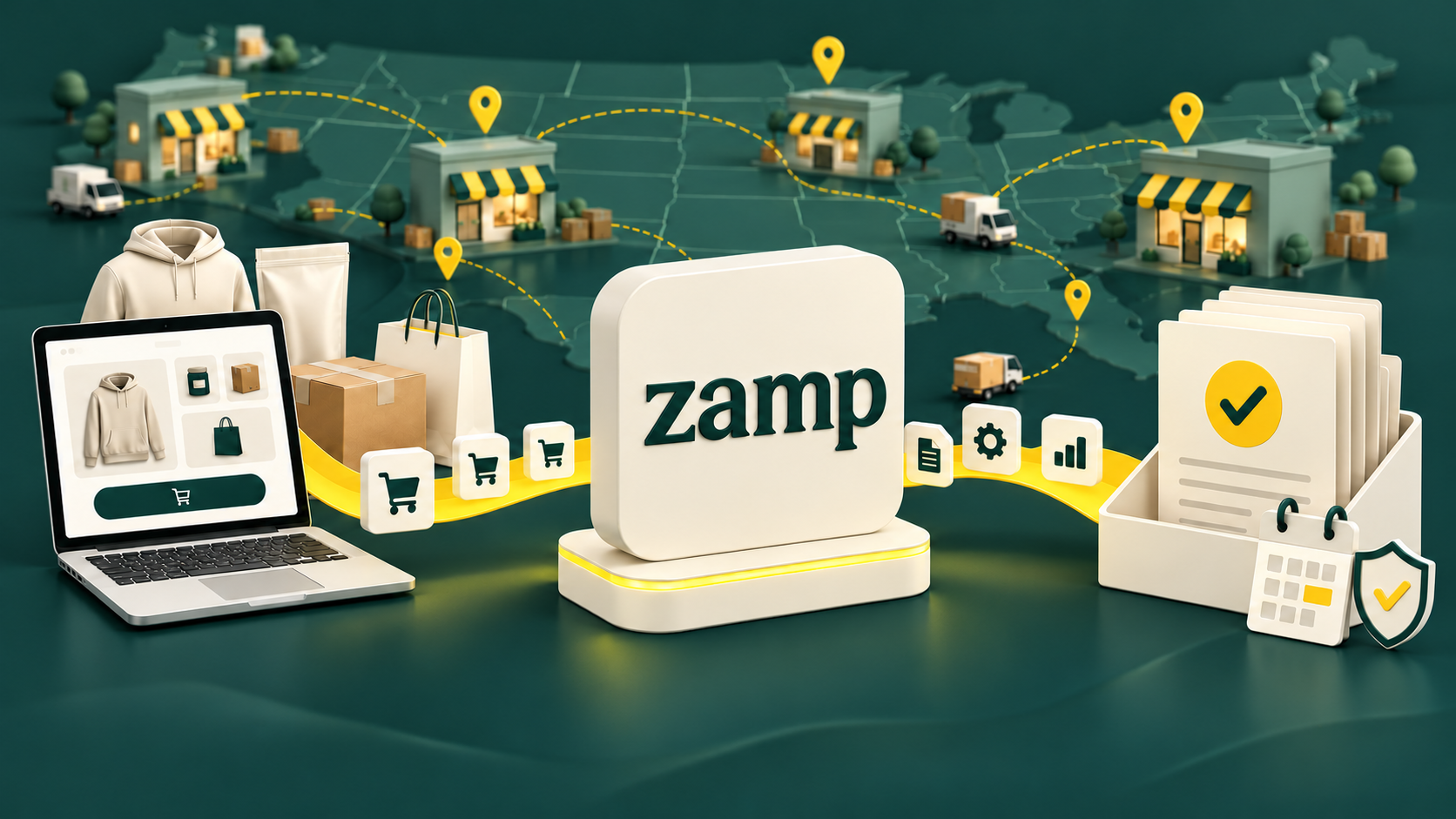
Zamp takes a fundamentally different approach than most platforms by providing fully managed sales tax compliance—not just software tools. The service handles nexus monitoring, state registrations, real-time rooftop-accurate rates across 13,000+ U.S. jurisdictions and 70+ countries, automated filing and remittance, and proactive notice management.
Shopify sellers managing 5+ state registrations who want sales tax completely off their plate, or multi-channel merchants needing consolidated compliance across Shopify, Amazon, and wholesale.
Zamp operates as “do it for you or do it with you,” adapting to whether you want full delegation or prefer reviewing filings with more oversight. Critically, Zamp shares liability with customers—when something goes wrong on their end, they cover penalties and interest through the Zamp Commitment. DIY platforms put all liability on your company.
The platform connects natively to Shopify, plus Amazon, BigCommerce, QuickBooks, NetSuite, and other channels, consolidating sales data for accurate nexus tracking across your entire business.
All-inclusive monthly pricing that covers software, service, registrations, filings, support, and dedicated account management. No per-transaction fees, no per-filing fees, no surprise invoices.
Get a free nexus assessment to understand your current exposure and see how Zamp works.
Shopify Tax is the native solution built into every Shopify store, offering rooftop-accurate calculations across U.S. jurisdictions without requiring a third-party app.
Early-stage Shopify-only sellers in 1-3 states who can handle registrations and filings manually. Once you cross into 5+ states or sell on multiple channels, the manual workload becomes unsustainable.
For merchants under $100,000 in annual sales, calculations are free. Above that threshold, Shopify charges 0.35% per order or 0.25% for Plus plan merchants.
TaxCloud positions itself as a cost-effective end-to-end solution, offering free tax calculations. The platform is a certified Streamlined Sales Tax (SST) provider, which unlocks discounts in 24 participating states—a significant cost advantage for sellers with broad geographic reach.
Cost-conscious Shopify sellers, particularly those with nexus in SST member states (including Indiana, Kansas, Kentucky, Michigan, Minnesota, and others) where free filing creates substantial savings.
TaxJar, now owned by Stripe, offers a middle-ground approach between pure DIY and fully managed services. The platform provides automated filing in most states, starting at $19/month for basic plans with transaction limits.
Merchants already embedded in the Stripe ecosystem who value brand familiarity.
Avalara serves large enterprises needing global tax compliance across 190+ countries, including VAT, GST, customs duties, and cross-border calculations.
Enterprise Shopify Plus merchants exceeding $10M in revenue with international sales requiring VAT compliance, customs calculations, and budget for custom implementations. Not practical for small-to-medium sellers given pricing opacity and implementation complexity.
Custom pricing based on transaction volume and feature requirements. For teams considering a switch, Zamp offers a migration guide from Avalara.
Numeral offers a straightforward per-filing pricing model with no monthly subscription. The platform emphasizes white-glove onboarding and relies on Shopify’s native calculations rather than maintaining its own tax engine.
Shopify sellers recently triggering nexus in a handful of states who prefer predictable per-filing costs over monthly subscriptions, and don’t need the extensive support of fully managed services.
Kintsugi brings newer technology to sales tax automation, with particular strength serving SaaS and digital goods sellers where taxability varies significantly by state.
SaaS companies and digital goods sellers on Shopify needing specialized handling of software taxability, which varies dramatically by state (taxable in some, exempt in others, sometimes depending on delivery method).
Quaderno focuses primarily on international sellers needing EU and UK VAT compliance alongside U.S. sales tax. Pricing starts at $49/month with support for multi-currency invoicing and global threshold monitoring.
International Shopify sellers with primary markets in Europe who need VAT compliance and treat U.S. sales tax as secondary, or merchants selling globally who can accept manual U.S. filing.
Sales tax nexus means you have sufficient connection to a state that requires you to collect and remit sales tax there. Most states use economic nexus thresholds—typically $100,000 in sales or 200 transactions—triggered by the 2018 Wayfair Supreme Court decision. For Shopify sellers, this means you can create tax obligations in states where you have no physical presence, purely through online sales volume.
Most platforms integrate through the Shopify App Store with one-click installation, granting API permissions to read order data, product catalogs, and customer information. The platform then either provides its own calculation engine at checkout or works alongside Shopify Tax for calculations while handling filing and compliance.
First, don’t ignore it—state tax authorities escalate non-responses with penalties and interest. Platforms with audit support will handle responses on your behalf. Without platform support, you’ll need to gather transaction records, verify your tax collection accuracy, and potentially engage a tax professional. The cost of undefended audits frequently exceeds years of platform subscription fees.
Choosing the right sales tax platform for your Shopify store comes down to matching capabilities against your actual needs—not selecting the cheapest option or the biggest brand name. For sellers managing multi-state compliance who want sales tax handled completely, Zamp’s managed service offers the combination of expert support, liability protection, and automation that lets you focus on growing your business instead of tracking filing deadlines.