
Alex Steele
Writer




TaxCloud has served as a budget-friendly entry point for businesses starting their sales tax compliance journey. But as companies grow across state lines, add sales channels, and face increasing complexity, many finance teams begin evaluating other options. Whether you’re looking for more hands-on support, broader global capabilities, or a service model that handles compliance end-to-end, understanding your alternatives helps you make the right choice for your business.
This guide examines six solutions for companies exploring options beyond TaxCloud, starting with Zamp’s managed service—which combines software with dedicated tax professionals to handle compliance from start to finish.
Zamp’s managed approach eliminates ongoing workload. Companies using Zamp report saving 20+ hours monthly compared to managing compliance themselves, with dedicated experts handling registrations, filings, and notices end-to-end.
Zamp approaches sales tax differently than traditional software platforms. Rather than providing tools and leaving execution to your team, Zamp combines an intelligent platform with dedicated tax professionals who handle compliance end-to-end—or work alongside your team based on your preference.
The service works for businesses across the spectrum, from startups to $300M+ companies, with two engagement options: “done for you” where Zamp manages everything while you approve, or “done with you” where your team maintains more oversight while Zamp handles execution. This flexibility appeals to controllers who want expert support without fully relinquishing control.
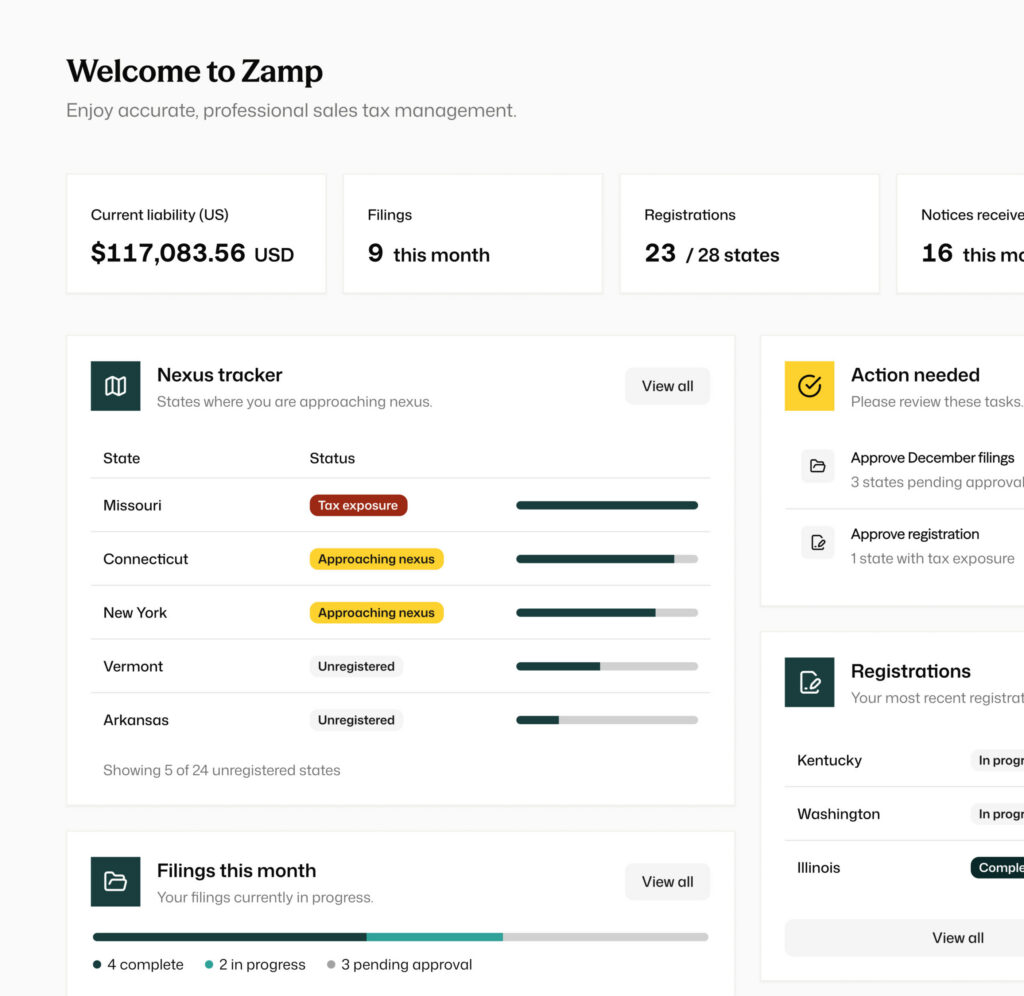
Companies that want sales tax handled rather than enabled—particularly fast-growing e-commerce brands, SaaS companies navigating state-by-state taxability rules, and multi-channel sellers managing compliance across platforms. Businesses approaching their first audit or dealing with past-due exposure also find value in Zamp’s cleanup and audit support capabilities.
All-inclusive monthly pricing that covers software, service, registrations, filings, support, and dedicated account management. No per-transaction fees, no per-filing fees, no surprise invoices.
Get a free nexus assessment to understand your current exposure and see how Zamp works.
Avalara is an indirect tax management software offering comprehensive tax automation for organizations with established accounting departments. The platform provides extensive calculation capabilities with deep integration into enterprise systems.
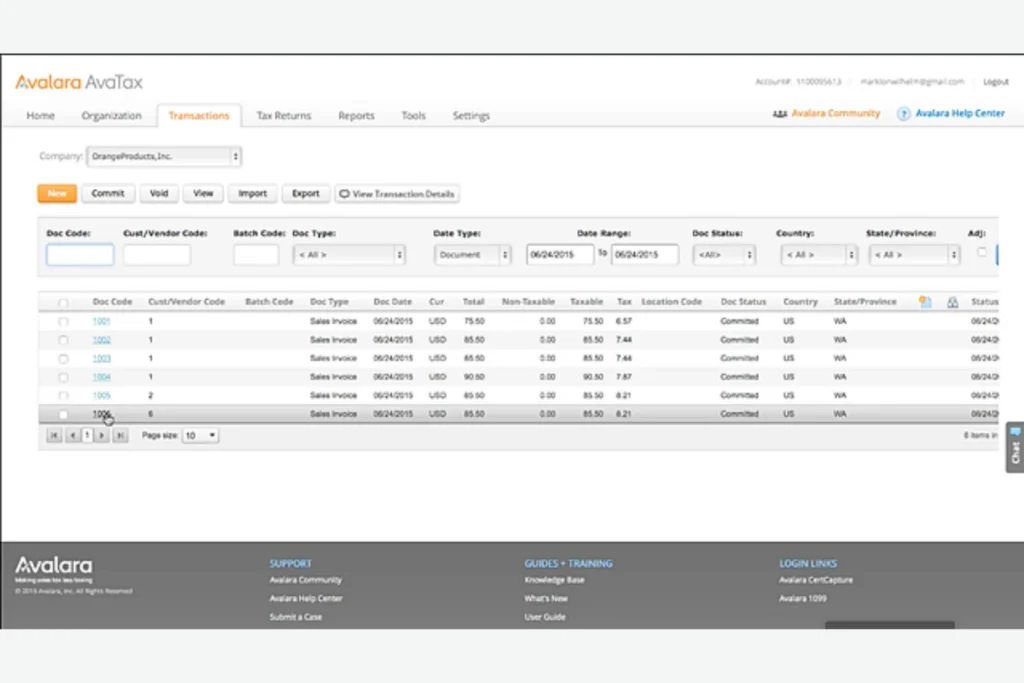
Large organizations with established accounting departments, companies requiring connections to specialized or legacy systems, and businesses with complex global operations spanning multiple tax types beyond sales tax.
Custom pricing based on transaction volume and feature requirements. For teams considering a switch, Zamp offers a migration guide from Avalara.
TaxJar, now owned by Stripe, provides sales tax automation focused on e-commerce businesses. The platform emphasizes developer experience with API response times under 20 milliseconds and straightforward integration documentation.
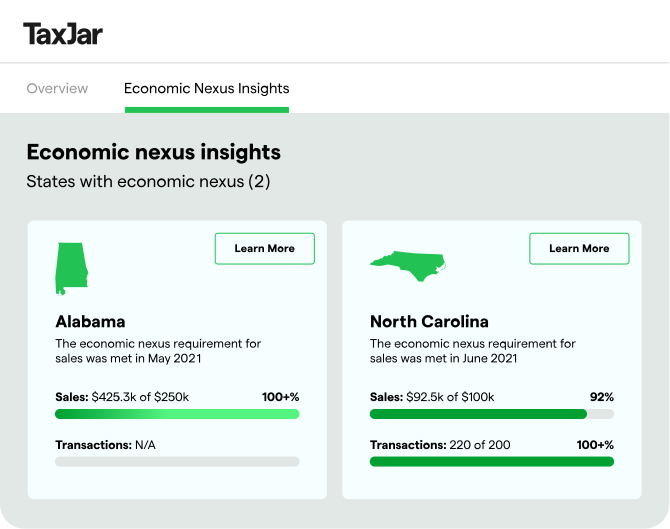
E-commerce businesses with technical teams comfortable implementing and managing their own compliance workflows. Companies already using Stripe for payments may find the ecosystem connection convenient.
Vertex is an indirect tax platform serving large enterprises requiring deep integration with major ERP systems like SAP and Oracle. The platform covers 19,000+ tax jurisdictions globally and specializes in complex tax determination for organizations with sophisticated compliance requirements.
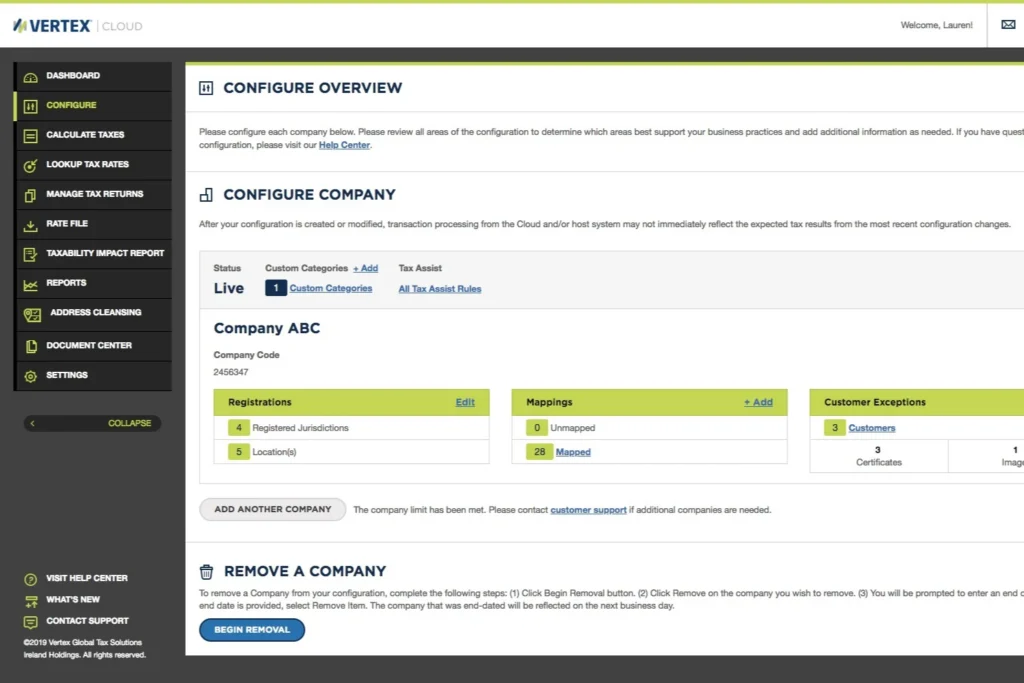
Fortune 500 companies and large enterprises with established SAP or Oracle environments, dedicated tax departments, and budgets supporting significant implementation investments. Organizations requiring multi-tax-type compliance (sales/use tax, VAT, payroll tax) from a single vendor.
Custom pricing upon request.
Kintsugi is a sales tax automation platform emphasizing streamlined workflows for growing businesses. The company targets mid-market companies seeking efficient compliance processes.
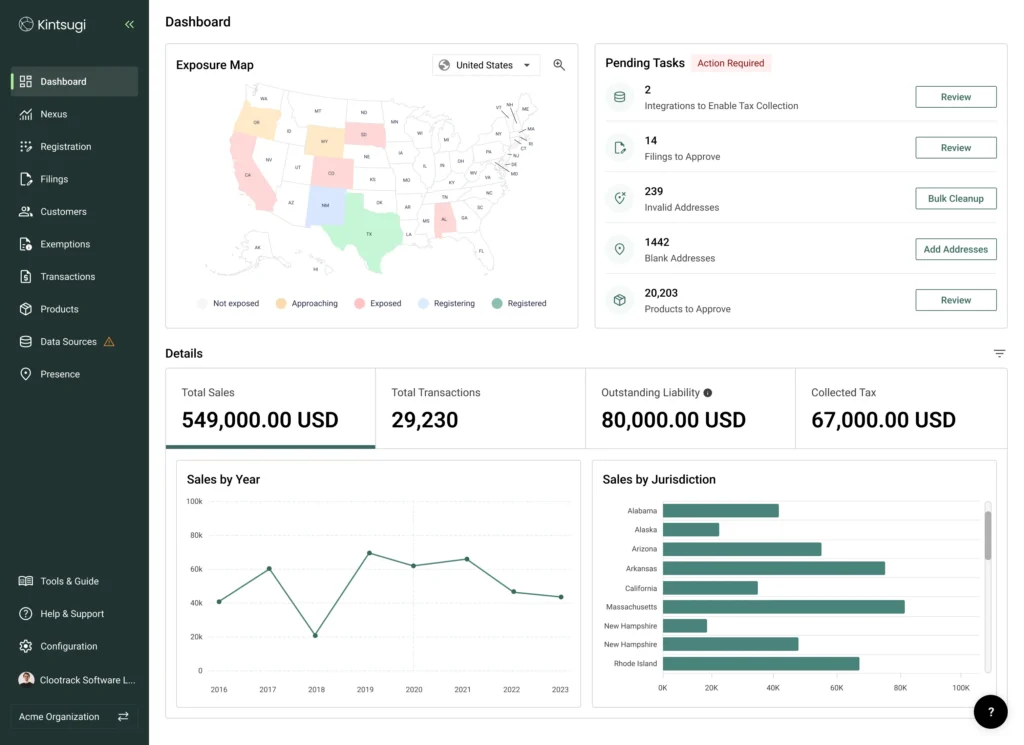
Growth-stage companies looking for automated compliance workflows who prefer managing tax operations through software rather than outsourcing to a service provider.
Numeral is a sales tax automation service with a focus on e-commerce businesses. The platform offers managed elements alongside its software, targeting small to mid-sized online sellers.
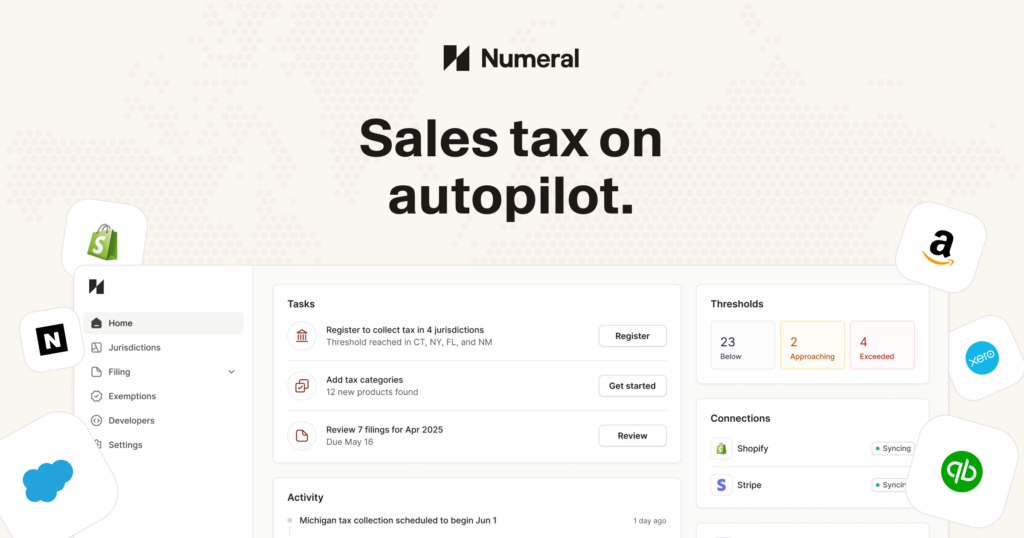
E-commerce businesses seeking straightforward compliance automation for U.S. sales tax obligations, particularly those with simpler multi-state footprints.
Migration complexity depends on your destination platform. Managed services like Zamp handle the transition for you—their team manages data migration, integration setup, and historical record transfer as part of onboarding. Zamp’s average onboarding requires under 2 hours of customer time. For software platforms, expect to invest internal resources in reconfiguring integrations, re-mapping product taxability, and testing calculations before cutover. Some providers offer contract buyout programs if you’re locked into existing agreements.
DIY software provides tools—calculation APIs, filing automation, nexus dashboards—that your team operates. You maintain responsibility for accuracy, timeliness, and compliance outcomes. A managed service handles the work itself: experts manage registrations, monitor nexus, file returns, resolve notices, and take on or share liability for errors. The difference comes down to whether sales tax remains your team’s responsibility or becomes someone else’s job.
Yes, with proper planning. The best time to switch is at month-end to create clean reporting boundaries, but mid-month transitions work with coordination. Managed services typically handle the logistics—Zamp’s onboarding specialists manage the cutover to ensure no filing gaps or duplicate registrations. Key considerations include transferring nexus data, ensuring rate continuity during the transition, and properly closing out returns with your previous provider.
Focus on: How do you handle errors—who bears liability for penalties and interest? What does onboarding actually require from my team? How do you price—per transaction, per filing, or all-inclusive? Do you support international VAT/GST if I expand globally? What happens when I receive a state notice—do I handle it or do you? Can I speak with a dedicated contact who knows my business, or will I submit tickets? Understanding these answers reveals the true nature of each provider’s service model.
.png)
%20(1).png)