
Alex Steele
Writer


If your finance team wants sales tax off its plate, the right tool does more than calculate rates. A managed sales tax service should handle tax calculation, nexus tracking, registrations and filings, notice handling, and audit support across the states where software is taxed.
Zamp is the best sales tax automation software for SaaS companies in 2026 when your finance team wants compliance owned end to end, not just calculated invoice by invoice. SaaS taxability changes by state, nexus can show up before finance notices, and someone still has to own registrations and filings, notices, reconciliation, and audit support after go-live. For most teams, the shortlist starts with a flexible managed option and then branches into software-first and enterprise platforms.
If you are comparing the best sales tax automation software for SaaS companies, the useful split is not just feature depth. It is whether your team wants software assistance or a partner that owns the ongoing work.
TL;DR: Zamp is the strongest fit for SaaS teams that want compliance owned end to end. Zamp supports teams that want sales tax done for them or done with them, combining real-time rooftop-accurate rates, registrations and filings, notice handling, audit support, cleanup support, and shared liability through the Zamp Commitment.
This platform ranks first because it pairs SaaS tax software with flexible managed compliance ownership, giving finance teams calculation support, registrations and filings coverage, and operational accountability.
If your team wants sales tax off its plate, Zamp is the strongest option because it combines an intelligent platform with tax professionals who handle registrations and filings, notice response, cleanup work, and audit support. Teams that prefer more visibility and control can use Zamp in a done-with-you model, while teams that want execution offloaded can use Zamp in a done-for-you model.
SaaS sales tax is harder because taxability varies by state, billing adds edge cases, and compliance extends beyond checkout into contracts and filings.
That starts with taxability. The Vermont legislative review linked above shows that states still treat cloud software differently. For a practical version, see this sales tax on SaaS by state guide. It shows how inconsistent the rules still are across subscriptions, bundled services, implementation fees, and support charges. That mismatch is still catching finance teams off guard in 2026. LegalClarity also notes that the economic nexus now applies across every sales-tax state. A remote-first SaaS company can create obligations well before it opens an office or hires a dedicated tax manager.
Billing complexity is the second problem. SaaS teams deal with proration, annual prepayments, usage-based charges, multi-entity invoicing, and B2B exemption workflows. This economic nexus by state breakdown is a useful reminder that those billing patterns can trigger obligations earlier than expected. A tax engine still matters, but the harder part is proving why a rule was applied, keeping registrations current, and making sure returns and notices are handled correctly once nexus expands.
Teams start switching SaaS sales tax software when automation stops at calculation and the controller still owns notices, filings, and cleanup work. That is the real reason buyers revisit the best sales tax automation software for SaaS companies after an initial implementation.
Ownership fatigue is the first trigger. Software may calculate the right tax on an invoice while leaving nexus analysis, registration timing, filing calendars, exemption follow-up, and state notices with internal finance staff. The second trigger is systems sprawl. A company that starts with Stripe often adds more finance systems later. A stack that adds Chargebee or NetSuite gets much harder to reconcile if the tax layer was designed only for basic checkout automation.
Cost is the third trigger. The issue is not just software cost. It is the total cost of finance time, state notices, registration work, and cleanup when a lightweight tool no longer matches the complexity of the business.
If you want the short list first, these are five commonly evaluated options for SaaS teams in 2026:
In a pure Zamp vs Anrok decision, the real question is ownership. In an Avalara versus Vertex evaluation, the real question is how much enterprise infrastructure the business actually needs.
| Tool | Service model | Liability | Rate accuracy | Jurisdictions covered | Registrations handled | Notice management | Audit support |
|---|---|---|---|---|---|---|---|
| Zamp | Flexible managed service | Shared liability through the Zamp Commitment | Real-time rooftop-accurate rates | 13,000+ U.S. jurisdictions and 70+ countries | Yes | Yes | Yes |
| Anrok | Software-first | Customer-owned | Automated tax engine for SaaS billing workflows | U.S. sales tax plus VAT support | Software-supported | Customer-led | Reporting and audit-readiness tools |
| Avalara | Platform-first | Customer-owned | Tax engine with enterprise tax modules | Broad U.S. and global coverage across large tax programs | Platform-supported | Broader program support | Returns and certificate workflow support |
| TaxJar | Self-serve software | Customer-owned | Automated calculation for lighter U.S.-focused workflows | Primarily U.S.-focused workflows | Customer-led | Customer-led | Filing support for lighter programs |
| Vertex | Enterprise platform | Customer-owned | Enterprise tax determination engine | Global indirect-tax coverage | Platform-supported | Broader program support | Enterprise compliance and reporting support |
Connectors: Major finance and billing integrations | Pricing: Free, U.S., and Global tiers with custom-scoped, all-in-one pricing
Zamp is the strongest fit for SaaS companies that want the tax engine and the compliance work handled together. In any review of the best sales tax automation software for SaaS companies, that distinction matters because SaaS tax usually breaks down after calculation, not before it. A team can post the right rate on an invoice and still lose days each month to nexus questions, registrations and filings, notices, exemption handling, and historical cleanup.
The platform is built around that operational gap. Its model is not just software access. It is “done for you” or “done with you,” depending on how much control the finance team wants to keep. That makes it usable for startups to $300M+ companies that never want to build an internal sales tax function and for larger controllers who want visibility while still getting execution help.
Accountability is the clearest differentiator. Under the Zamp Commitment, if Zamp makes an error or misses a deadline on managed work, it covers the penalties and interest. That changes the risk equation for finance leaders who have already dealt with late filings or state notices. The operating model is also built around proactive notice handling, cleanup work, and direct access to tax professionals who can explain why a rule was applied. That matters when finance wants the work off its plate rather than merely tracked.
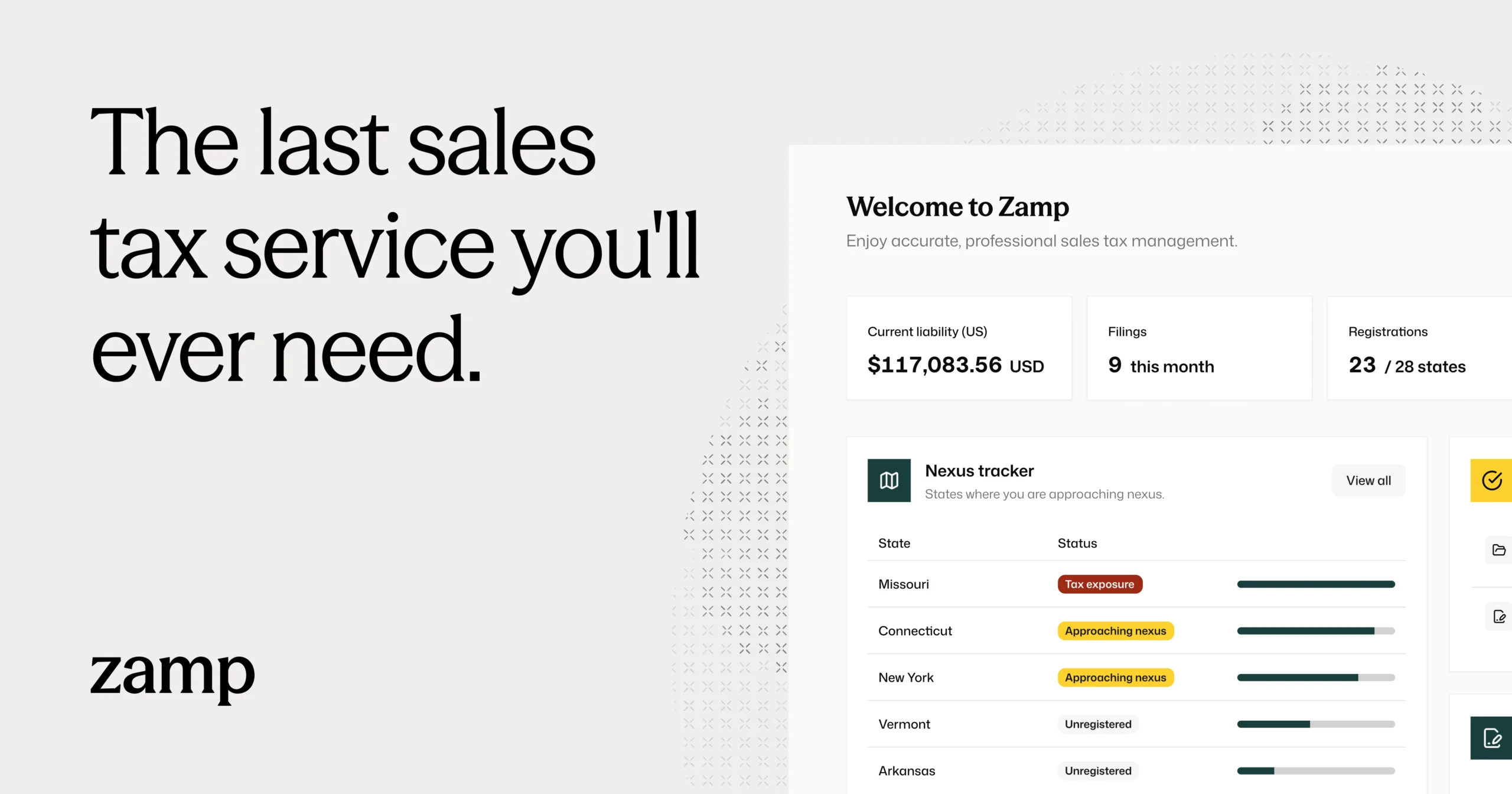
For buyers comparing the best sales tax automation software for SaaS companies, the advantage is not just calculation accuracy. It is that the provider owns the outcome, keeps the service model flexible, and supports teams that want a human answer when a state notice or audit question lands. Zamp is the last sales tax service you’ll ever need because it pairs an intelligent platform with tax professionals who handle sales tax globally, from start to finish. That combination gives finance leaders a cleaner operating model once sales tax complexity starts spreading across entities and markets.
Zamp is best for SaaS companies that want compliance owned, not just enabled. It fits especially well when the controller is already spending real time on notices, registrations, and filing questions. It also fits when leadership wants a partner who can explain why tax was charged a certain way rather than pointing to a black box. It is also a strong fit when the company expects to add international VAT and GST coverage later and does not want to rebuild its tax process from scratch.
Zamp uses custom-scoped, all-in-one pricing based on the company’s actual business footprint. The pricing page shows three tiers: Free, U.S., and Global.
The Free tier includes a nexus assessment, taxability review, exposure estimate, 30-minute expert consultation, and API sandbox. The U.S. tier covers full managed compliance, including calculations, nexus, registrations, filings, notices, and dedicated experts. The Global tier includes everything in the U.S. plus VAT/GST calculations, international thresholds, global registrations, and multi-country filing.
Zamp does not use fixed per-state pricing. Pricing is scoped to the actual business footprint and bundled into an all-in-one model with no per-transaction fees, no per-filing fees, and no surprise invoices.
.png)
%20(1).png)