



In the US, sales tax is charged at the point of sale when selling tangible personal property. Most everyday things like toothbrushes or coffee tables are taxable items.
But some states exempt necessities, like groceries and medicines, from sales and use tax. A handful of states take that a step further and exempt clothing from sales tax.
We’ve created a list of states with sales tax exemptions around clothing, along with a list of states that require businesses to charge it.
States without sales tax on clothing
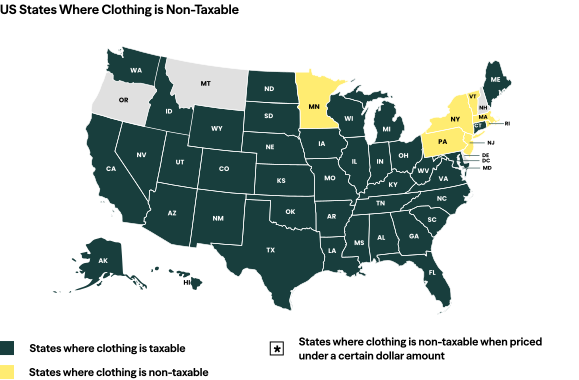
Clothing is, in general, not taxable in these states.
However, the states that don’t generally have a tax on clothing and footwear make exceptions.
Sales Tax on Clothing Tip
For example, many of the above states that don’t tax clothing still consider accessories, fur or formalwear, athletic and recreational gear, and protective equipment to be taxable.
Other states’ tax laws set a dollar threshold for taxability. For example, in New York state, clothing is exempt from state sales tax (and sometimes local tax) if it sells for less than $110 per item or pair.
Also, some states where clothing is generally taxable may make exceptions for clothing bought or sold by nonprofits or provided to the needy.
Further, some states also make exceptions regarding “who” wears the clothes. For example, dog clothing (and clothing worn by other pets) is generally considered taxable, even in states where clothes worn by humans are non-taxable.
Be sure to read what each state says about clothing taxability before setting up your sales tax collection engine to collect (or not) sales tax on clothing.
Sales tax on clothing by state 2026
Clothing is subject to sales tax in most states. Even states that have some sales tax exemptions when it comes to taxing clothing, often only include clothing sold below a certain dollar amount in their tax exemption. And they often exclude categories of clothing such as clothing accessories, fur, formalwear, athletic gear, protective clothing or clothing intended for non-humans.
This chart details clothing taxability by state:
| State | Is Clothing Taxable? | More Information |
|---|---|---|
| Alabama | Yes | – |
| Alaska | No statewide sales tax | Some local Alaska areas have sales tax, and they can choose whether or not to tax clothing |
| Arizona | Yes | – |
| Arkansas | Yes | – |
| California | Yes | – |
| Colorado | Yes | – |
| Connecticut | Yes | – |
| Delaware | No | Delaware does not have a statewide sales tax |
| Florida | Yes | – |
| Georgia | Yes | – |
| Hawaii | Yes | – |
| Idaho | Yes | – |
| Illinois | Yes | – |
| Indiana | Yes | – |
| Iowa | Yes | – |
| Kansas | Yes | – |
| Kentucky | Yes | – |
| Louisiana | Yes | – |
| Maine | Yes | – |
| Maryland | Yes | – |
| Massachusetts | No, but with exceptions | Clothing or footwear selling for $175 or less is tax-exempt (with exceptions) |
| Michigan | Yes | – |
| Minnesota | No, but with exceptions | Accessories, fur clothing, sports and recreational clothing, and protective clothing are all taxable |
| Mississippi | Yes | – |
| Missouri | Yes | – |
| Nebraska | Yes | – |
| Nevada | Yes | – |
| New Hampshire | No | New Hampshire does not have a statewide sales tax. |
| New Jersey | No, but with exceptions | Accessories, fur clothing, sports and recreational clothing, and protective clothing (except when worn as part of daily use for work) are all taxable |
| New Mexico | Yes | – |
| New York | No, but with exceptions | Clothing items sold for less than $110 are non-taxable. Local sales tax rates may still apply. |
| North Carolina | Yes | – |
| North Dakota | Yes | – |
| Ohio | Yes | – |
| Oklahoma | Yes | – |
| Oregon | No | Oregon does not charge a statewide sales tax |
| Pennsylvania | No, but with exceptions | Accessories, fur clothing, sports and recreational clothing, and formalwear are all taxable |
| Rhode Island | No, but with exceptions | The first $250 of the price of an article of clothing is tax-exempt. Accessories, recreational clothing, and protective clothing are taxable |
| South Carolina | Yes | – |
| South Dakota | Yes | – |
| Tennessee | Yes | – |
| Texas | Yes | – |
| Utah | Yes | – |
| Vermont | No, but with exceptions | Accessories, equipment, sports and recreational or protective clothing and equipment are all taxable |
| Virginia | Yes, but with exceptions | Certain protective clothing and workwear are non-taxable |
| Washington | Yes | – |
| Washington DC | Yes | – |
| West Virginia | Yes | – |
| Wisconsin | Yes | – |
| Wyoming | Yes | – |
Tax-free weekends and clothing sales tax
Even if clothing is generally taxable in a state, that state may hold sales tax holidays where clothing is tax-exempt. Holidays that exempt clothing generally take place around “back to school” time in the autumn.
Learn more about sales tax holidays here.
Clothing sales tax: Conclusion
Every state has different rules when it comes to sales tax on clothing. It will all come down to where you have physical and economic nexus. If someone buys your product or goods in a state that requires sales tax on clothing, you must collect and remit it to that state’s Department of Revenue.
Get Help for Your Company
30-minute call
sales tax expert
off your plate