
Alex Steele
Writer




When e-commerce and SaaS companies reach the point where sales tax compliance becomes unavoidable, choosing the right solution can define whether tax becomes a distraction or disappears from your to-do list entirely. Two options—Zamp and TaxCloud—represent fundamentally different philosophies about how businesses should handle sales tax. While TaxCloud provides software tools for companies willing to manage compliance themselves, Zamp offers a fully managed service where tax professionals handle everything from registration to filing to notice resolution. This comparison reveals why Zamp’s managed approach delivers superior outcomes for businesses that value time, accuracy, and peace of mind over managing yet another software platform.
Zamp positions itself as “the last sales tax service you’ll ever need”—an intelligent platform paired with dedicated tax professionals who handle compliance end-to-end. Founded after the landmark 2018 Wayfair decision created economic nexus obligations for online sellers, Zamp has built its reputation on removing the compliance burden entirely from finance teams. The company serves 1,200+ finance teams, has remitted over $300M in sales tax, and maintains 400 years combined expertise on staff—including former state auditors who understand how tax authorities think.
TaxCloud takes a different approach as a Streamlined Sales Tax (SST) Certified Service Provider. With over 15 years of experience, TaxCloud offers sales tax calculation software with optional add-on services for filing and audit support. The platform serves over 2,000 businesses and emphasizes affordability, particularly for sellers in the 24 SST member states where free filing is available for qualifying businesses.
The fundamental difference is clear: TaxCloud gives you tools; Zamp takes care of everything.
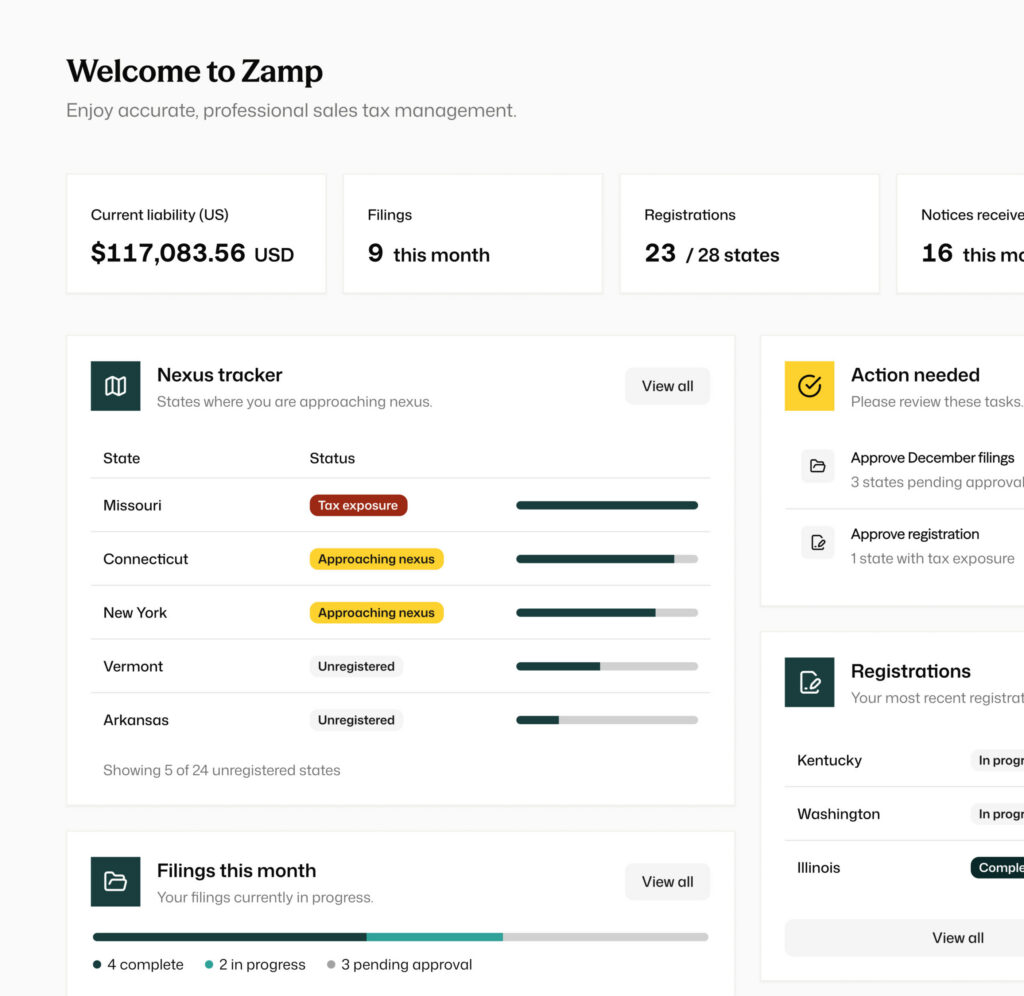
Zamp’s fully managed service encompasses the entire compliance lifecycle:
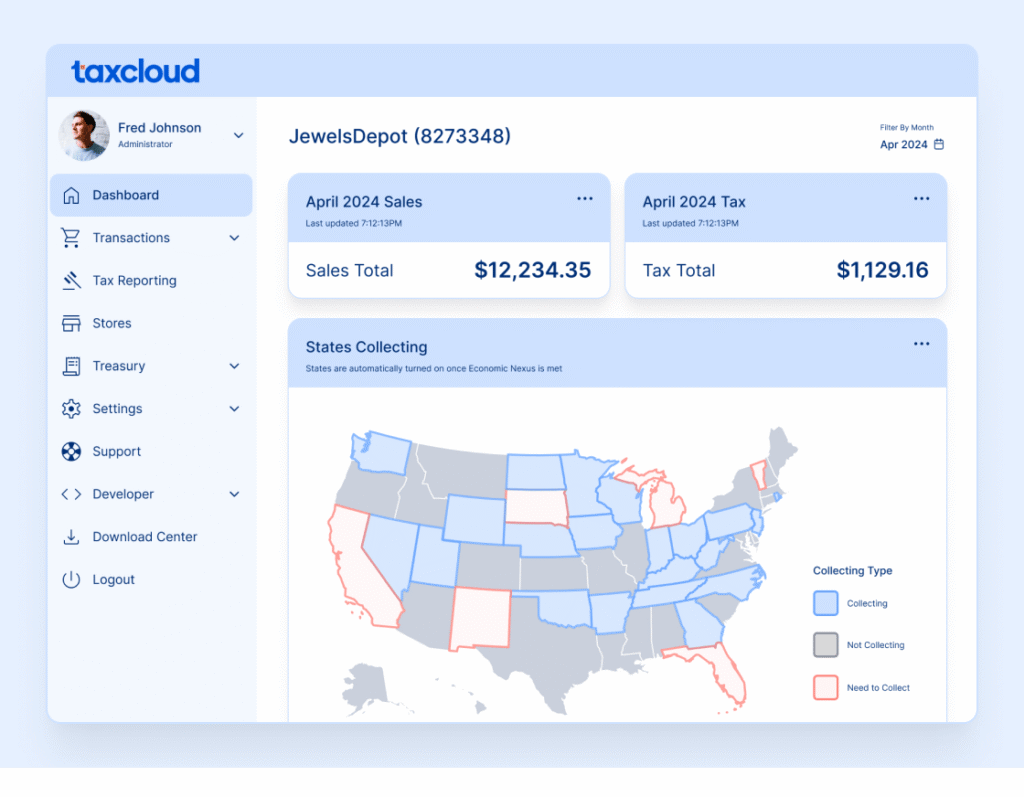
TaxCloud’s self-service platform provides:
The pricing models reflect each company’s approach—and the total cost tells a different story than base subscription prices suggest.
Zamp’s all-inclusive pricing:
TaxCloud’s à la carte structure:
When you calculate actual total cost of ownership, the picture shifts dramatically. Factor in the 10+ hours monthly that finance teams spend managing DIY solutions, and Zamp’s managed model often delivers better total value despite higher base pricing.
Zamp serves companies that value time over cost minimization:
Zamp’s sweet spot ranges from startups to $300M revenue businesses—companies large enough that compliance complexity demands expert handling but lean enough that building internal tax departments makes no sense.
TaxCloud appeals to different buyer profiles:
The choice depends on what your business values. If your finance team has bandwidth and expertise to manage tax compliance actively, TaxCloud’s lower entry price may work. If you’d rather have tax handled entirely so your team can focus on growth, Zamp delivers that outcome.
Both companies can point to satisfied customers, but the nature of satisfaction differs meaningfully.
Zamp’s performance metrics:
TaxCloud’s performance indicators:
TaxCloud customers praise affordability and responsive support. However, those savings assume businesses have internal capacity to use the software effectively—a hidden cost that erodes the apparent price advantage.
Zamp’s expert-led model:
This concentration of expertise means when your CFO asks “why was this taxed this way?”—Zamp can answer. The company owns and verifies all its tax data rather than buying third-party information, enabling accurate, audit-defensible responses.
TaxCloud’s support structure:
TaxCloud provides solid support for software questions, but the fundamental model requires customers to understand sales tax well enough to use the tools correctly. That’s a significant difference when tax rules vary by state, product category, and delivery method.
Both platforms connect to major e-commerce and accounting systems, with different strengths.
Zamp’s native integrations:
Zamp emphasizes native integrations—not middleware—ensuring accurate data flows directly between systems without translation layers that can introduce errors.
TaxCloud’s integration coverage:
TaxCloud’s particular strength is its Shopify App Store presence. For Shopify-first merchants prioritizing that specific integration, TaxCloud offers a compelling connection. However, Zamp provides broader ERP coverage for growing companies with more complex financial systems.
The comparison comes down to a fundamental question: do you want software to manage, or compliance handled for you?
Zamp’s managed model wins for growing companies because:
TaxCloud works for businesses willing to actively manage tax compliance with lower upfront costs. But for companies seeking to eliminate sales tax as a concern entirely—to focus on product, customers, and growth rather than tax administration—Zamp represents the modern standard in compliance.
Sales tax is complex. Managing it shouldn’t be your job. Zamp makes it someone else’s problem—and handles it better than you ever could internally.
Zamp provides a fully managed sales tax service where dedicated tax professionals handle everything—calculations, registrations, filings, notices, and audit support—end-to-end. TaxCloud offers self-service software with optional add-on services, requiring businesses to manage the compliance process themselves. The difference is between having compliance owned for you versus having tools to manage it internally. For businesses that want sales tax off their plate entirely, Zamp’s managed model eliminates the ongoing time investment that self-service platforms demand.
While TaxCloud’s base subscription starts lower, the total cost of ownership shifts when you add filing fees, audit support, and registration costs. Factor in the 10+ hours monthly that finance teams spend managing DIY solutions, and Zamp often delivers better total value. TaxCloud’s SST certification provides genuine savings for businesses selling primarily in SST member states willing to manage compliance actively.
Yes. Zamp offers global VAT and GST managed services including multi-region calculations, international threshold monitoring, streamlined registrations, and unified multi-country filing. This extends the same managed service philosophy internationally—calculations, compliance, and filings handled by experts rather than requiring your team to understand VAT requirements across different countries. TaxCloud focuses exclusively on U.S. sales tax and does not offer international VAT/GST support.
Every Zamp customer receives a dedicated account manager and onboarding specialist—not just access to a support queue. Zamp maintains an average support response time under one hour, with phone support prominently available rather than hidden behind ticket systems. The team includes former state auditors and specialists with 400 years of combined sales tax expertise. This means when complex questions arise about specific state rules or product taxability, customers get authoritative answers from people who understand both the regulations and the enforcement perspective.
Zamp provides native integrations—not middleware—with major platforms including Shopify, BigCommerce, WooCommerce, Adobe Commerce, Amazon, Walmart, Faire, QuickBooks Online, NetSuite, Xero, Microsoft Dynamics Business Central, and Stripe. The company also offers a developer API with a 30-day sandbox trial for custom integrations. Native integrations ensure accurate data flows directly between systems, eliminating the translation errors that middleware can introduce. Average onboarding takes just 2.5 hours with Zamp’s white-glove support handling the technical setup.
.png)
%20(1).png)