
Alex Steele
Writer




When growing e-commerce and SaaS companies evaluate sales tax compliance solutions, the choice between Zamp and Numeral represents two fundamentally different philosophies. Numeral positions itself as modern tax software with transparent per-filing pricing. Zamp takes a different approach entirely—combining an intelligent platform with dedicated tax professionals who handle compliance from start to finish. This comparison reveals why Zamp’s managed service model delivers superior outcomes for businesses that want sales tax off their plate, not another tool to manage.
The fundamental distinction between Zamp and Numeral lies in who owns the compliance outcome.
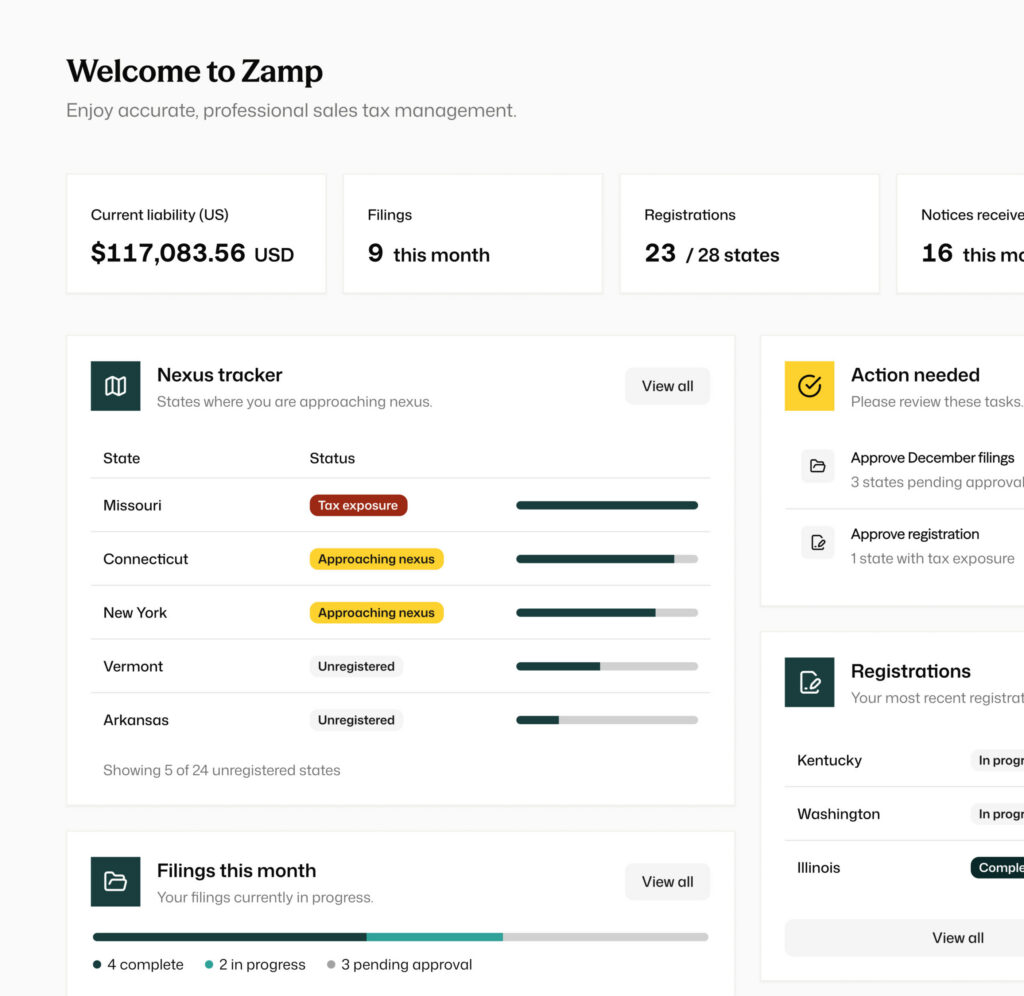
Zamp operates as a fully managed service. Tax professionals handle registrations, filings, notices, and audits without requiring customer oversight. When you partner with Zamp, you’re not buying software—you’re gaining a team that owns sales tax compliance end-to-end. Every customer receives a dedicated Account Manager and Onboarding Specialist. The result: average onboarding under 2 hours of customer time, with most teams fully live within a week.
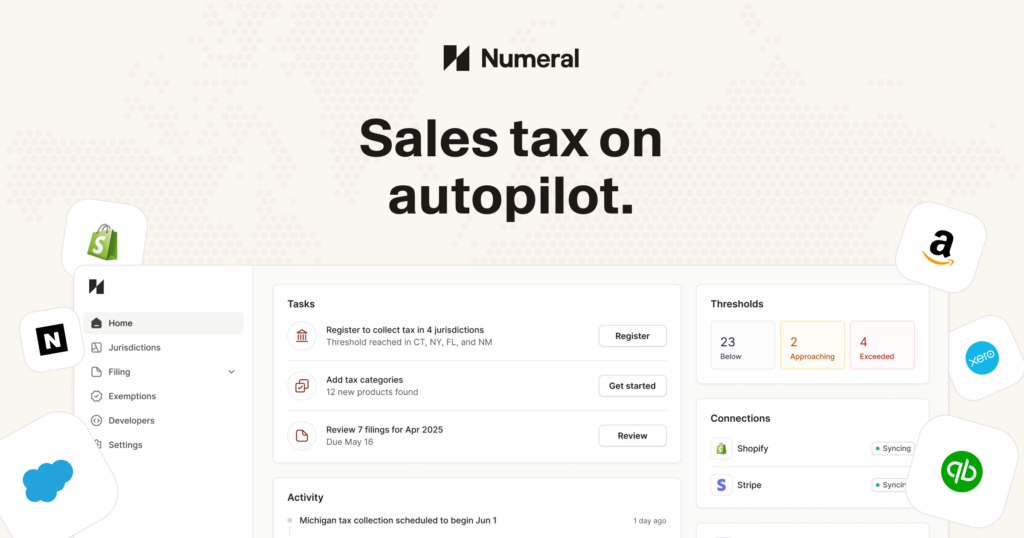
Numeral operates as software with optional services. While they offer automation features including Autofile and Autoregister, their platform approach means customers still need to oversee tax logic decisions and monitor nexus changes. Their virtual mailbox feature notifies you of state notices—but you still need to interpret them, meet deadlines, and resolve issues yourself.
This distinction matters because sales tax complexity doesn’t disappear when you install software. Someone has to handle the state letters, track threshold changes across 13,000+ jurisdictions, and make judgment calls on product taxability. With Zamp, that someone is a tax professional. With Numeral, customers maintain more responsibility despite automation features.
The pricing structures reveal each company’s target market and true cost of compliance.
Zamp’s pricing approach:
Numeral’s pricing approach:
Zamp’s all-inclusive model eliminates scaling anxiety. Adding states doesn’t trigger surprise invoices. And because Zamp handles notice resolution and audit support, you’re not budgeting for the hidden costs of managing compliance yourself.
Beyond pricing, the features available at each tier determine whether you’re getting true compliance or just calculation software.
Zamp uses rooftop-accurate calculations with geospatial coordinates—not ZIP codes—covering all 13,000+ U.S. jurisdictions. This first-party tax content approach means high filing accuracy that holds up under audit.
Numeral offers calculation across 11,000+ jurisdictions with their Standard plan. While both platforms provide accurate calculations, the accuracy of your filings depends on more than just the rate—it requires proper product taxability mapping, nexus tracking, and exemption handling.
Zamp provides proactive nexus monitoring with alerts at 80% of threshold—giving you runway to prepare before obligations kick in. When you cross thresholds, Zamp handles the registration automatically.
Numeral offers 24/7 nexus monitoring that notifies you of changes and provides automated registration tools through their Autoregister feature.
This feature alone justifies Zamp’s managed approach. Zamp monitors state portals daily, classifies notices using intelligent systems, and has tax specialists resolve issues directly with state agencies—with full context from your filing and nexus history. Zamp has handled 75,000+ notices on behalf of customers.
Numeral provides a virtual mailbox that aggregates state correspondence. When a notice arrives, customers still manage resolution. That means interpreting state requirements, meeting response deadlines, and potentially hiring outside help for complex issues.
Zamp includes full audit representation with former state auditors on staff who understand how agencies think. When you face an audit, Zamp represents you.
Numeral provides documentation and tools to support your audit preparation. Customers handle the audit itself.
Every Zamp customer works with a dedicated Account Manager—a named person who knows your business.
Numeral uses pooled support with standard customer service channels.
Zamp customers consistently report positive experiences with the managed service approach. The 97.8% customer retention rate reflects the value of having tax professionals handle compliance end-to-end.
Zamp serves 1,200+ finance teams and has remitted $300M+ in sales tax through 100,000+ filings completed on-time.
The retention gap reflects the fundamental service model difference. When tax professionals own compliance, outcomes improve. When customers own compliance through software, more oversight is required.
Both platforms connect with major e-commerce and accounting systems, but depth matters.
Zamp integrations:
Numeral integrations:
For e-commerce businesses and SaaS companies using enterprise systems, Zamp’s native integrations—particularly the certified QuickBooks and native NetSuite connections—provide more reliable data flow than middleware-dependent alternatives.
The right choice depends on your business stage and internal capabilities.
Numeral may work for:
Zamp is the better choice for:
The 20+ hours per month that Zamp customers save represents real capacity returned to your finance team. That time compounds—every month you’re not managing tax compliance is a month spent on growth initiatives.
For businesses serious about removing sales tax from their operational burden, Zamp’s fully managed model provides advantages that software alone cannot match.
Ownership versus enablement. Zamp owns the compliance outcome. When something goes wrong—a state notice, an audit, a calculation question—Zamp handles it. The Zamp Commitment means if their error causes penalties, they cover the cost. This transfers risk from your business to a team equipped to manage it.
Expertise concentration. Zamp’s team includes former state auditors with deep sales tax expertise. When your CFO asks “why was this taxed this way?”—Zamp can answer with audit-defensible rationale. Software without that expertise leaves you searching for answers.
Predictable economics. All-inclusive pricing means your sales tax costs don’t spike when you expand into California or Texas. You can forecast compliance costs accurately, which matters for financial planning and board reporting.
Time reclaimed. The hours not spent interpreting state letters, reviewing filing accuracy, or researching taxability rules add up to meaningful productivity gains. Finance teams consistently describe working with Zamp as “sales tax off our plate”—not “sales tax software in our stack.”
For Series A+ e-commerce and SaaS companies, the question isn’t whether you can afford managed compliance—it’s whether you can afford the distraction and risk of managing compliance yourself.
Zamp provides fully managed sales tax compliance where dedicated tax professionals handle registrations, filings, notice resolution, and audit support end-to-end. You receive a dedicated Account Manager who knows your business. Numeral offers tax software with automation features including Autofile and Autoregister, but the customer retains responsibility for oversight. The distinction: Zamp owns the outcome; with Numeral, you maintain more involvement in the compliance process despite having software tools.
Numeral charges per-filing and per-registration fees, so costs increase as you expand into more states and filing frequencies. Zamp uses all-inclusive pricing scoped to your business footprint, so adding states doesn’t trigger additional per-filing or per-registration charges. For businesses planning multi-state expansion, Zamp’s model provides budget certainty that usage-based pricing cannot.
With Zamp, the notice is handled entirely by tax specialists—they monitor state portals daily, classify the notice, and resolve it directly with the agency using full context from your filings. Zamp has resolved 75,000+ notices. With Numeral, their virtual mailbox notifies you of the correspondence, but you manage the response—interpreting requirements, meeting deadlines, and contacting the state yourself.
Yes. Zamp provides managed VAT services covering 70+ countries, including multi-region calculations, global threshold monitoring, streamlined registration, and unified multi-country filing. Numeral offers international coverage in their Pro plan for 60+ countries, but requires custom pricing. For businesses with cross-border sales, Zamp’s global capabilities match its U.S. offering—fully managed by tax professionals.
Switching typically takes less than one week with minimal customer effort. Zamp’s onboarding team migrates historical data, validates current obligations, connects your platforms, and ensures filings continue without interruption. Most teams invest under 2 hours of their own time during the transition. The process includes reviewing your current registrations, transferring exemption certificates, and establishing integrations with your e-commerce and accounting systems.
.png)
%20(1).png)