
Alex Steele
Writer




Kintsugi has gained attention as an automation-focused sales tax platform with free nexus monitoring and a pay-per-filing model. For businesses evaluating their options, the sales tax compliance market offers several distinct approaches—from self-service platforms to fully managed services that handle everything from registrations to audit support. This guide examines seven alternatives to help finance leaders find the right fit for their compliance needs, whether they prefer hands-on control or want experts managing the entire process.
Zamp provides fully managed sales tax that combines an intelligent platform with dedicated tax professionals. The service model offers flexibility: Zamp can handle everything end-to-end (“do it for you”) or work alongside your team with more oversight (“do it with you”), depending on how much control you prefer to maintain.
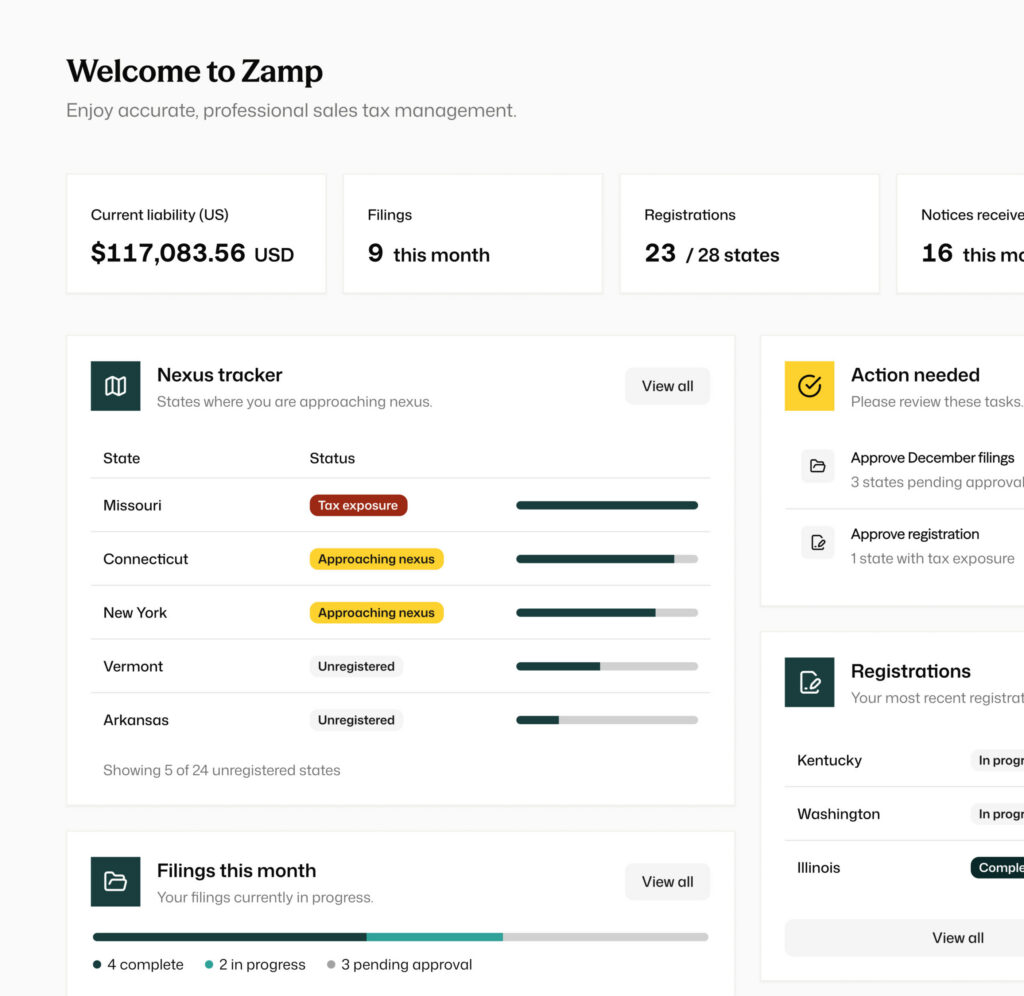
Startups to $300M+ companies seeking complete sales tax management without building internal tax expertise. Particularly well-suited for e-commerce brands, SaaS companies, and multi-channel sellers who want compliance handled rather than just enabled.
The platform integrates natively with Shopify, BigCommerce, Amazon, NetSuite, QuickBooks Online, Stripe, and other major platforms. Average onboarding takes less than two hours, and customers report saving 20 hours monthly on compliance tasks.
Every customer receives a dedicated account manager and access to a team with 400 years combined sales tax expertise, including former state auditors. Support response averages under one hour, with phone support prominently available rather than hidden behind ticket queues.
All-inclusive monthly pricing that covers software, service, registrations, filings, support, and dedicated account management. No per-transaction fees, no per-filing fees, no surprise invoices.
Get a free nexus assessment to understand your current exposure and see how Zamp works.
Avalara is an indirect tax management software offering comprehensive tax automation for organizations with established accounting departments. The platform provides extensive calculation capabilities with deep integration into enterprise systems.
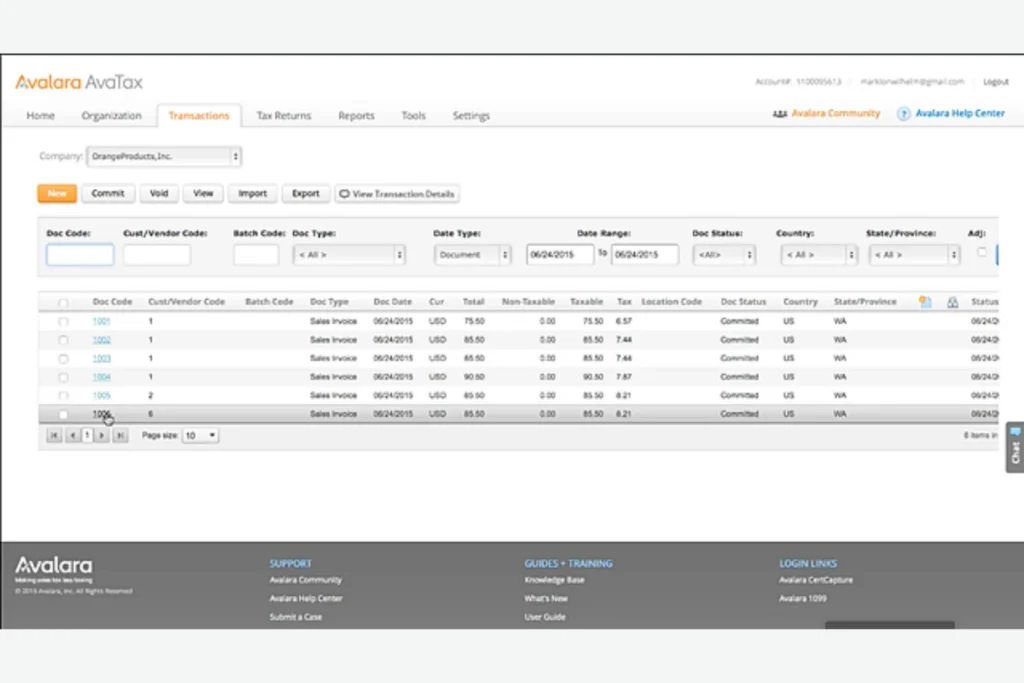
Large enterprises with in-house tax teams who need comprehensive global tax coverage and extensive ERP integrations. Ideal for organizations with dedicated IT resources for implementation and ongoing management.
Custom pricing based on transaction volume and feature requirements. For teams considering a switch, Zamp offers a migration guide from Avalara.
TaxJar is a sales tax automation platform owned by Stripe, focused on e-commerce businesses with straightforward multi-state compliance needs.
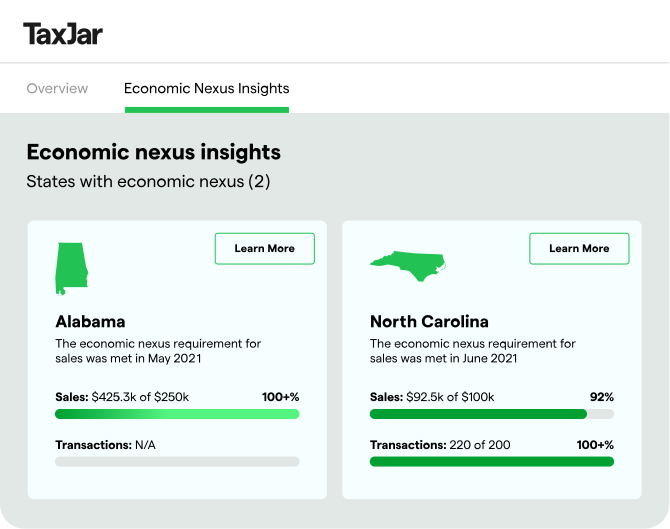
Small to mid-sized e-commerce sellers who prefer self-service compliance management and want transparent, publicly listed pricing. Organizations comfortable managing their own tax compliance using automated tools.
Anrok has built a sales tax platform specifically designed for software and SaaS companies, with particular strength in subscription and usage-based billing models.
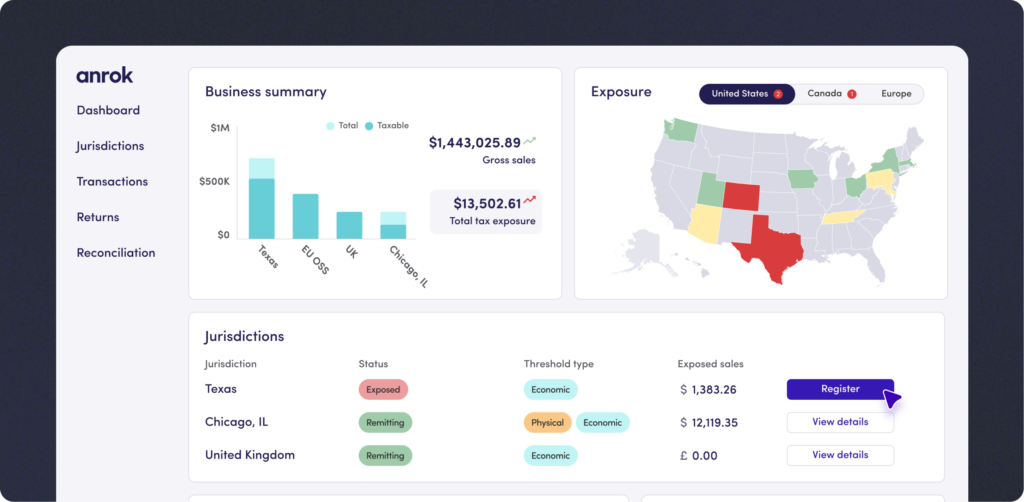
SaaS companies, particularly those with complex usage-based pricing, subscription billing, or B2B models. Developer-focused organizations wanting modern API documentation and technical implementation support.
Custom pricing based on company size and requirements.
Vertex serves large organizations with comprehensive indirect tax management, offering deep functionality for complex enterprise environments and Fortune 500 requirements.
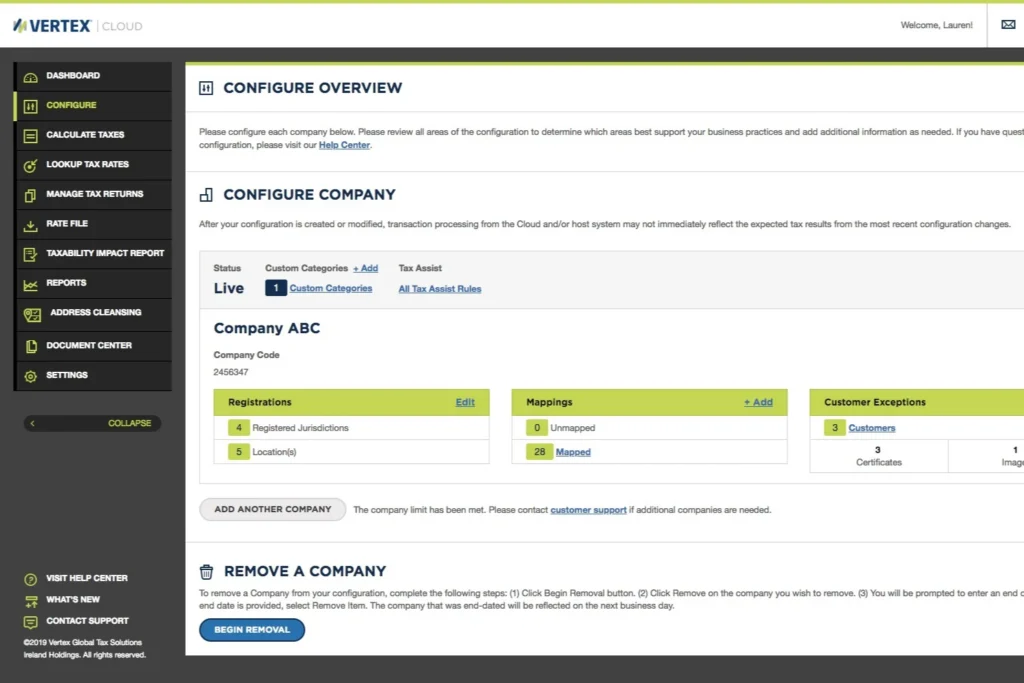
Large enterprises with established accounting departments, complex manufacturing or distribution operations, and requirements for deep ERP integration. Organizations managing multiple indirect tax types across global operations.
Custom pricing upon request.
Numeral is a newer entrant focused on U.S. sales tax compliance with a modern interface and flat-fee pricing structure.
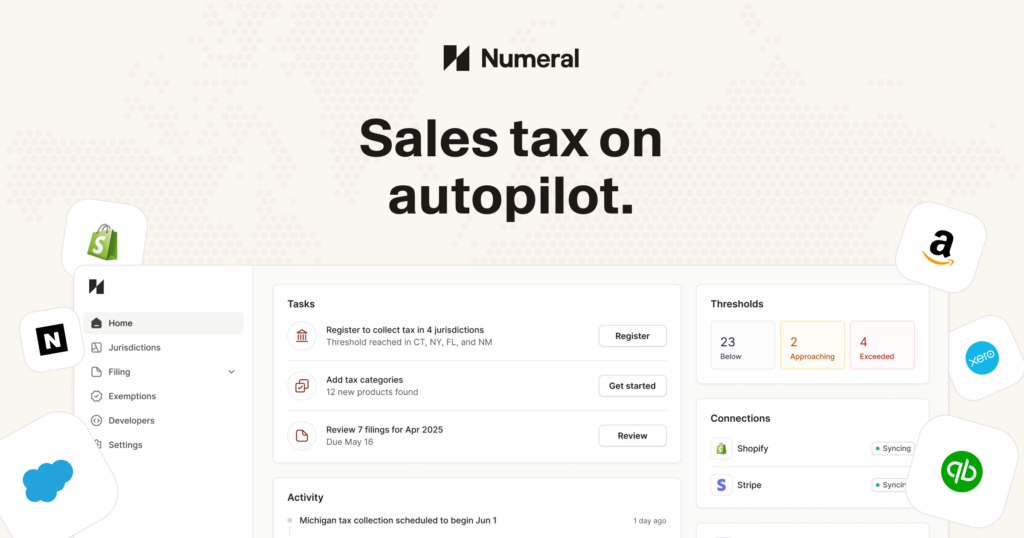
U.S.-focused businesses seeking a contemporary platform experience with straightforward pricing. Companies wanting managed service elements with modern software design.
Numeral positions itself as a modern alternative to legacy platforms, emphasizing ease of use and transparent pricing for growing businesses.
Sovos provides enterprise tax compliance and regulatory reporting solutions for large multinational organizations managing complex indirect tax obligations.
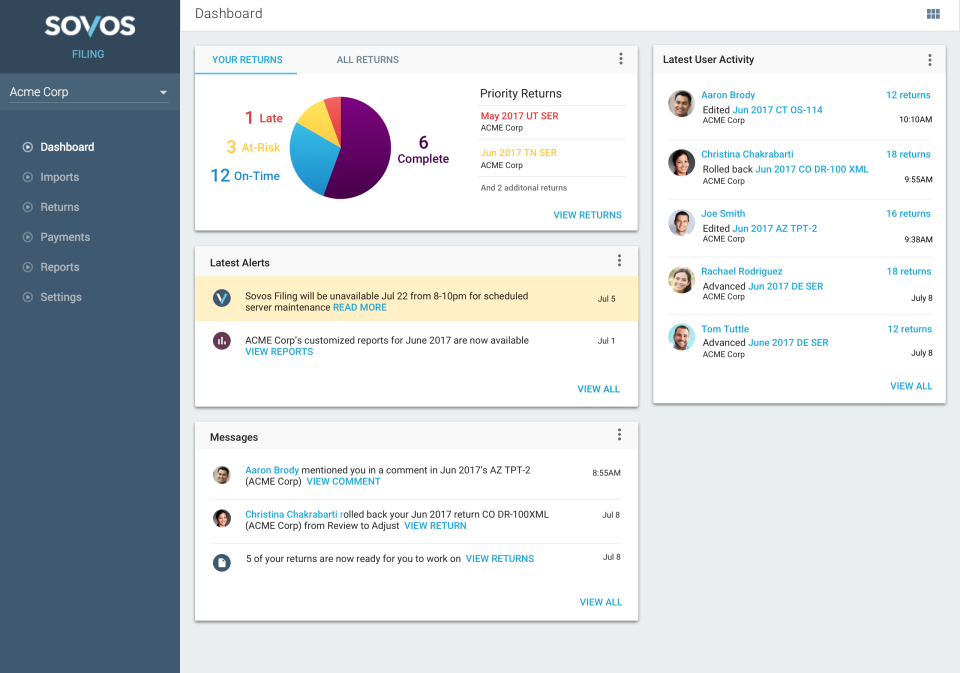
Large multinational corporations with sophisticated compliance requirements across multiple tax types and jurisdictions. Organizations needing regulatory reporting capabilities beyond sales tax.
Custom enterprise pricing.
Migration complexity depends on your current setup and the new provider’s onboarding process. Managed service providers like Zamp typically handle the transition with white-glove onboarding—average implementation takes less than two hours. Self-service platforms may require more hands-on setup. Key considerations include transferring historical transaction data, updating integrations with your e-commerce platforms and ERPs, and timing the switch around filing deadlines to avoid gaps in compliance.
Focus on five areas: service model—do you want to manage compliance yourself or have experts handle it; total cost including registrations, filings, and support, not just base subscription; data accuracy and how the provider maintains tax rates and rules; integration depth with your existing tech stack; and support structure, from ticket-based systems to dedicated account managers. Also consider liability—whether the provider shares responsibility for errors or places all risk on your business.
Yes, many businesses run parallel systems during migration to ensure continuity. This approach lets you validate calculations match between platforms, complete any pending filings with your current provider, and gradually shift transaction volume to the new system. Managed service providers often coordinate this transition timeline and handle the complexity of switching registrations and filing responsibilities.
Consider your internal resources: Do you have staff with sales tax expertise? How many states require filings? How much time does your team spend on compliance today? Businesses can save significant time with managed services, often finding the cost offset by productivity gains. Self-service works well when you have dedicated staff and want direct control. Managed services make sense when you’d rather focus your team on core business activities and have experts handle compliance details.
Reputable providers support data portability through API exports and CSV downloads. Your transaction history, exemption certificates, and filing records should transfer to maintain audit trails. When evaluating alternatives, ask specifically about data migration support, historical record access, and how the new provider handles audit preparation for periods before the switch. Managed service providers typically coordinate with your previous provider to ensure seamless handoff of active registrations and pending obligations.
.png)
%20(1).png)