
Alex Steele
Writer




HOST has built a reputation as a boutique sales tax service provider, offering hands-on compliance support for growing businesses. But as your company scales—or if you’re looking for different pricing structures, broader technology integrations, or varying levels of service involvement—you may find yourself evaluating other options. Whether you want a managed sales tax solution that handles everything from registrations to audit support, or software that gives your team direct control, this guide covers eight alternatives worth considering.
Zamp takes a different approach to sales tax compliance by combining an intelligent platform with dedicated tax professionals who manage your compliance work—either fully on your behalf or alongside your team. This “do it for you or do it with you” model serves businesses from startups to large enterprises who want flexibility in how much they stay involved.
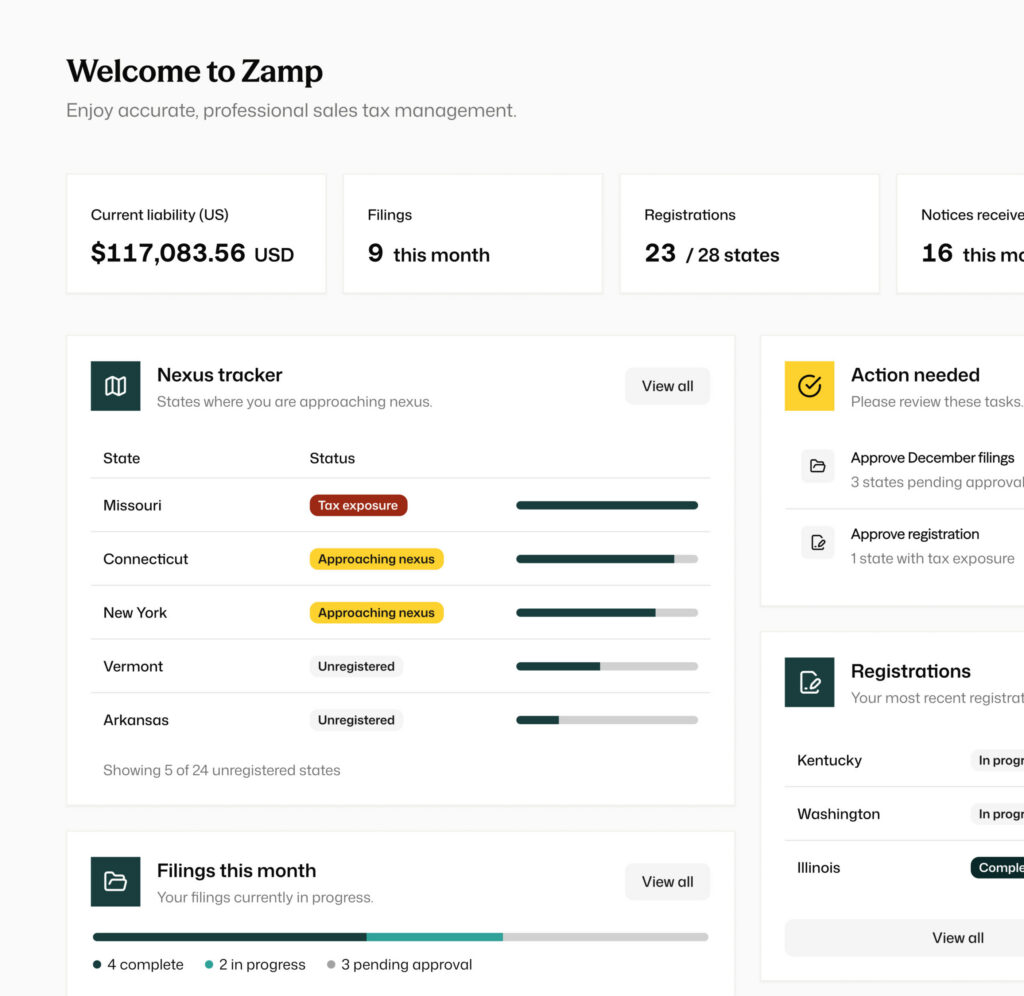
Companies seeking comprehensive compliance support with the option for full delegation or collaborative oversight. Particularly well-suited for e-commerce brands, SaaS companies, and multi-channel sellers who want sales tax handled without building internal tax expertise.
All-inclusive monthly pricing that covers software, service, registrations, filings, support, and dedicated account management. No per-transaction fees, no per-filing fees, no surprise invoices.
Get a free nexus assessment to understand your current exposure and see how Zamp works.
Avalara is an indirect tax management software offering comprehensive tax automation for organizations with established accounting departments. The platform provides extensive calculation capabilities with deep integration into enterprise systems, serving 43,000+ customers globally.
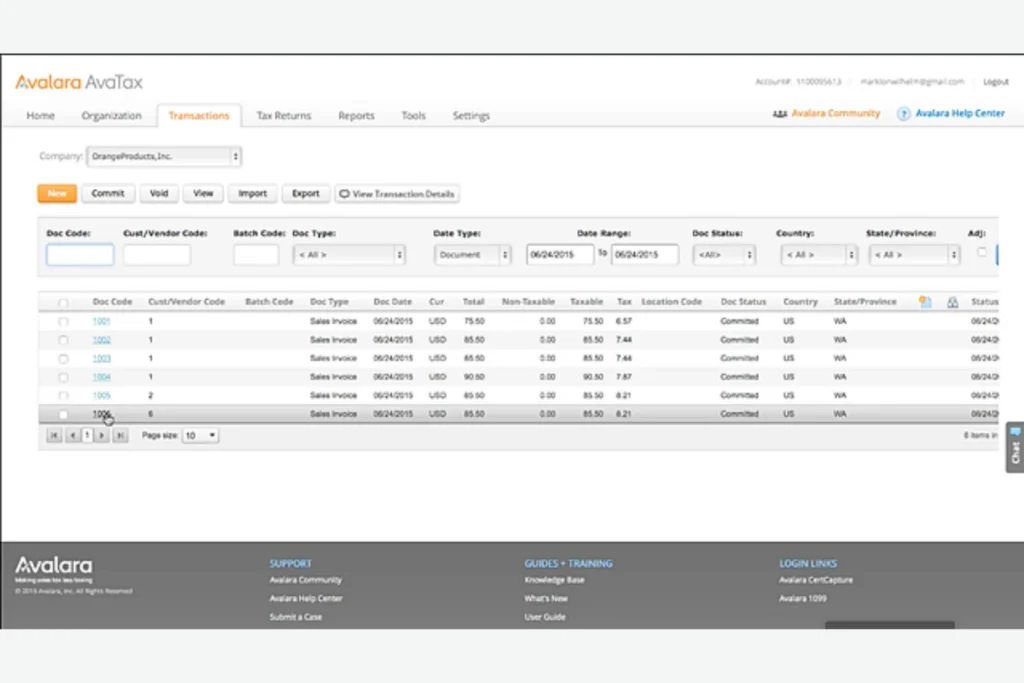
Large enterprises with in-house tax teams who need comprehensive global tax coverage and extensive ERP integrations. Ideal for organizations with dedicated IT resources for implementation and ongoing management.
Custom pricing based on transaction volume and feature requirements. For teams considering a switch, Zamp offers a migration guide from Avalara.
TaxJar, now owned by Stripe, provides sales tax automation with calculation, nexus tracking, and filing capabilities. The platform emphasizes user-friendly design and transparent tiered pricing, making it accessible for businesses managing compliance with minimal tax expertise.
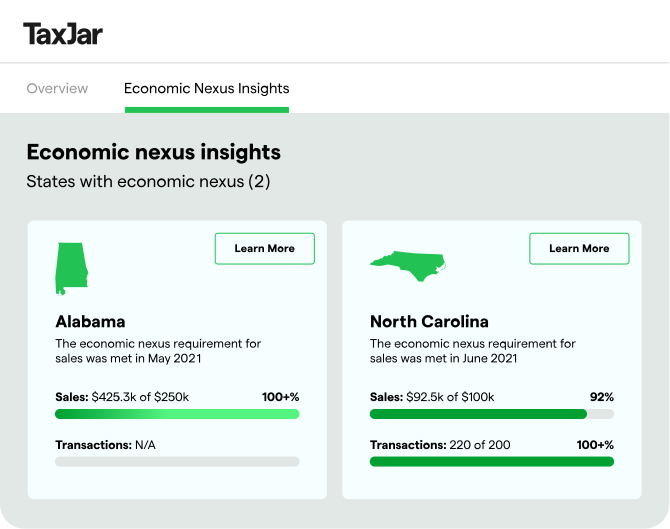
E-commerce businesses seeking straightforward software with intuitive interfaces. The platform works well for companies comfortable with self-service compliance management and those already in the Stripe ecosystem.
Vertex serves enterprise organizations with sophisticated indirect tax requirements across multiple jurisdictions and tax types. The platform handles complex multinational operations and offers deep ERP integrations for large-scale implementations.
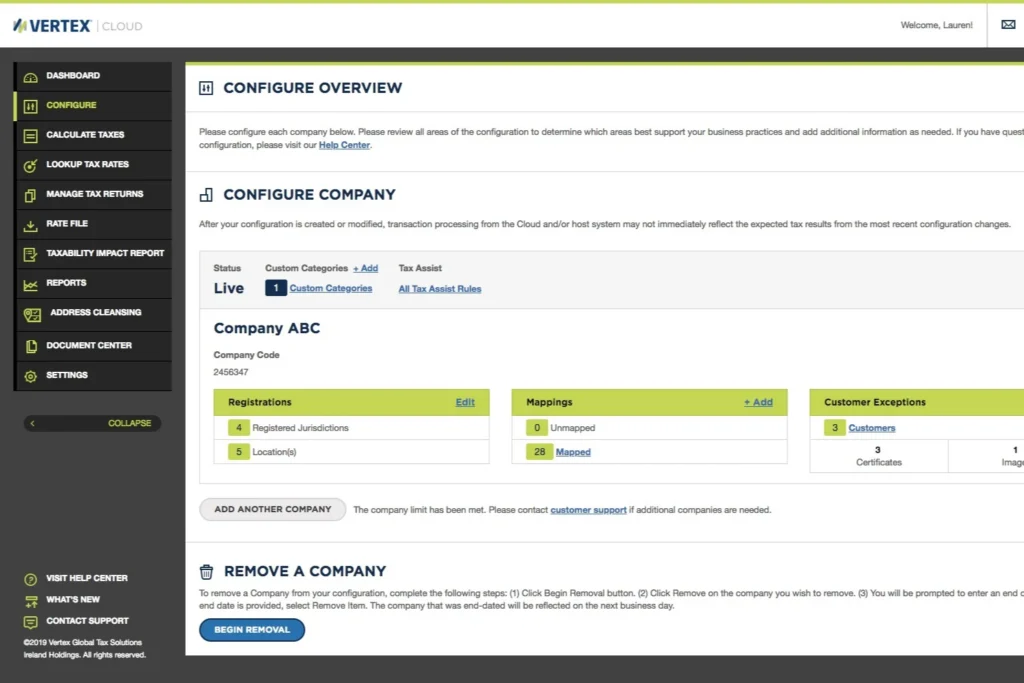
Large enterprises with established accounting departments, complex multi-entity structures, and significant ERP customization needs. Vertex excels in serving multinational corporations managing 19,000+ jurisdictions globally.
Custom pricing upon request.
Anrok focuses specifically on software and SaaS companies, with features designed around subscription billing models and the unique taxability considerations that digital businesses face. The platform emphasizes modern interfaces and developer-friendly tools.
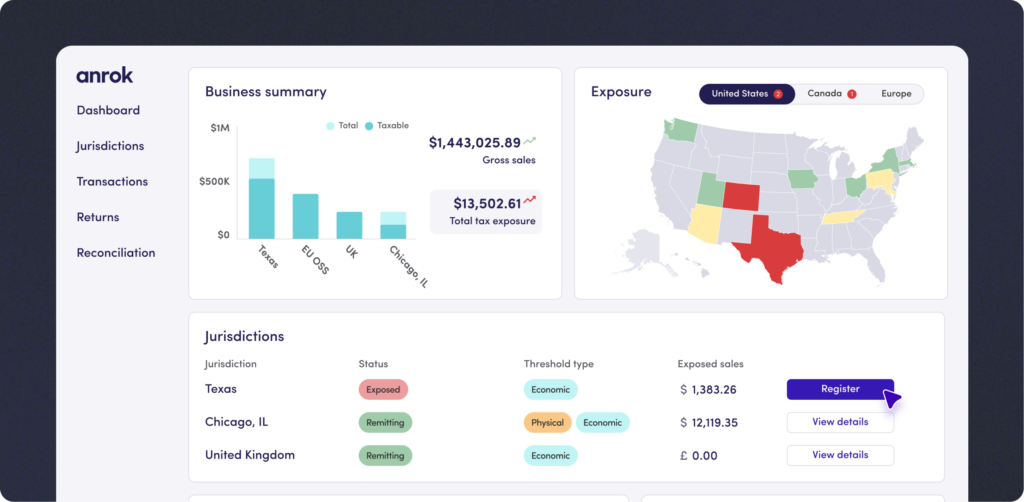
SaaS companies, subscription businesses, and technology startups with digital-first revenue models. The platform serves mid-market segment companies with features tailored to software business needs.
Custom pricing based on company size and requirements.
Numeral serves e-commerce businesses with a transparent, per-filing pricing model. The platform focuses on straightforward U.S. sales tax automation with clear cost structures that make budgeting predictable.
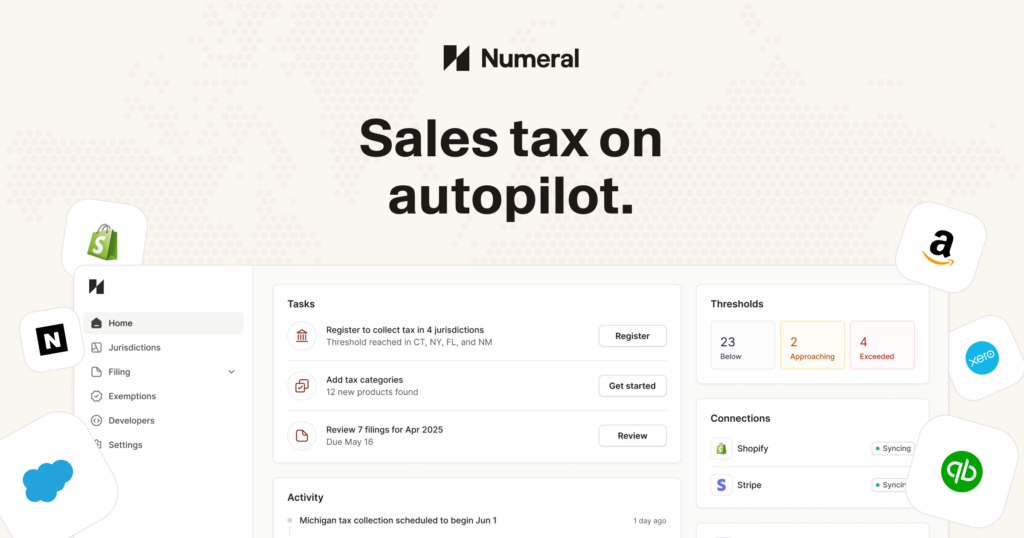
E-commerce sellers who want transparent pricing and are comfortable managing compliance with software support. The per-filing model works well for businesses with predictable state footprints who value cost certainty.
Kintsugi positions itself as an automation-focused sales tax platform for startups and small-to-medium businesses. The platform emphasizes efficiency through technology and serves companies looking for modern compliance tools.
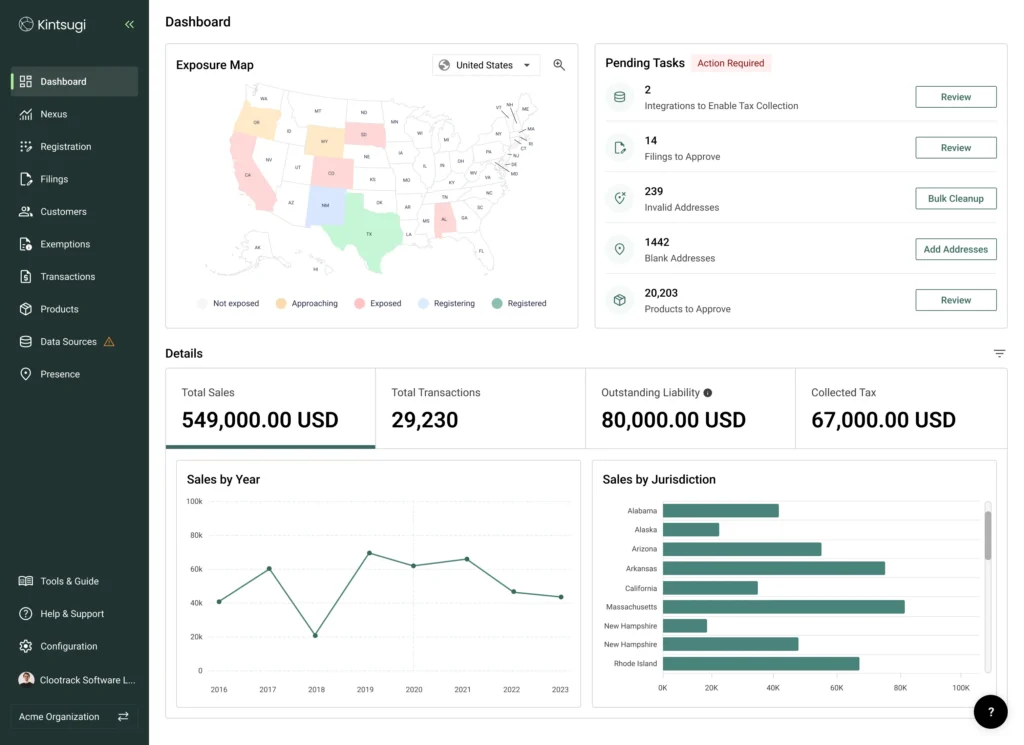
Startups and SMBs seeking automated sales tax compliance with contemporary technology. Kintsugi serves businesses looking for streamlined processes at the small-to-medium business scale.
Sovos provides enterprise tax compliance and regulatory reporting across multiple indirect tax types. The platform serves large multinational organizations with complex compliance requirements spanning various jurisdictions and tax categories.
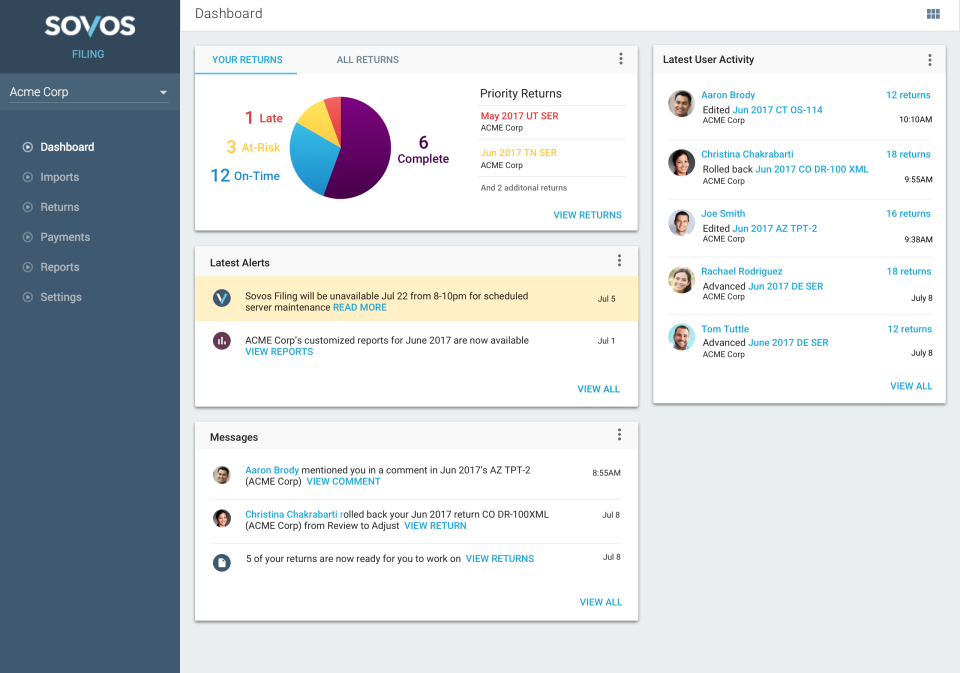
Large enterprises requiring broad indirect tax coverage beyond just sales tax, including VAT, e-invoicing, and regulatory reporting. Sovos serves organizations managing compliance across multiple tax types and regions.
Included with NetSuite licensing.
Migration timelines vary significantly by provider. Zamp’s white-glove onboarding typically takes < 2 hours on average, with the team handling integration setup, historical data validation, and transition management. Software platforms like TaxJar may require days to weeks of self-service implementation. Enterprise platforms like Vertex can take several months for full deployment. Most providers support parallel operation during transition to maintain filing continuity.
Most providers support data export and import, though formats and processes differ. When switching to Zamp, the onboarding team handles historical data validation as part of the setup process, ensuring records transfer accurately. For self-service platforms, you’ll typically export via API or CSV and manage the import yourself. Ask prospective providers specifically about their data migration support before committing.
Look beyond headline rates to understand total cost of ownership. Per-transaction fees compound with volume growth. Percentage-based models scale with revenue. Flat-fee models provide predictability but require scoping your actual footprint. Also factor in add-on costs for features like automated filing, registration services, and exemption certificate management—some providers bundle these while others charge separately.
Consider your team’s bandwidth, tax expertise, and how you want to spend your time. If you have dedicated tax professionals who want powerful tools, software platforms give them direct control. If you’d rather have compliance handled—with experts managing registrations, filings, notices, and audit support—a managed service removes that work from your plate. Many finance leaders find that the hours saved significantly outweigh cost differences.
This varies significantly. Zamp’s Commitment means they cover penalties and interest resulting from their errors—actual liability sharing. Numeral offers a similar guarantee for on-time filing. Most software platforms place full compliance responsibility on your company, as you’re operating the tool. Clarify this distinction before signing, as it affects your risk exposure meaningfully.
.png)
%20(1).png)